)
What kind of baby furniture actually fits into your home - Not just the nursery?
Before your baby arrives, you imagine a beautifully organised nursery. A cot, a changing table, a nursing chair, soft lighting. Everything in its place.
Then the baby arrives. And you quickly realise that life doesn't happen in the nursery.
It happens on the sofa at 3am. In the kitchen while you're trying to eat something with one hand. In the living room, on the floor, in the hallway. Your baby is wherever you are – and the furniture that actually gets used is the furniture that works in those spaces too.
Why does so much baby furniture only work in one room?
Most baby products are designed with the nursery in mind. They're sized for it, styled for it, and assume that's where your baby will spend most of their time. But first-time parents and experienced ones alike tend to discover the same thing: the nursery is often the room the baby spends the least time in, especially in the early months.
The result is a home full of products that work beautifully in one corner and feel out of place everywhere else. Bulky frames that clash with your living room. Plastic surfaces that don't belong near your dining table. Things you move out of the way rather than into the room.
It doesn't have to be that way.
What to look for in baby furniture that works across your whole home
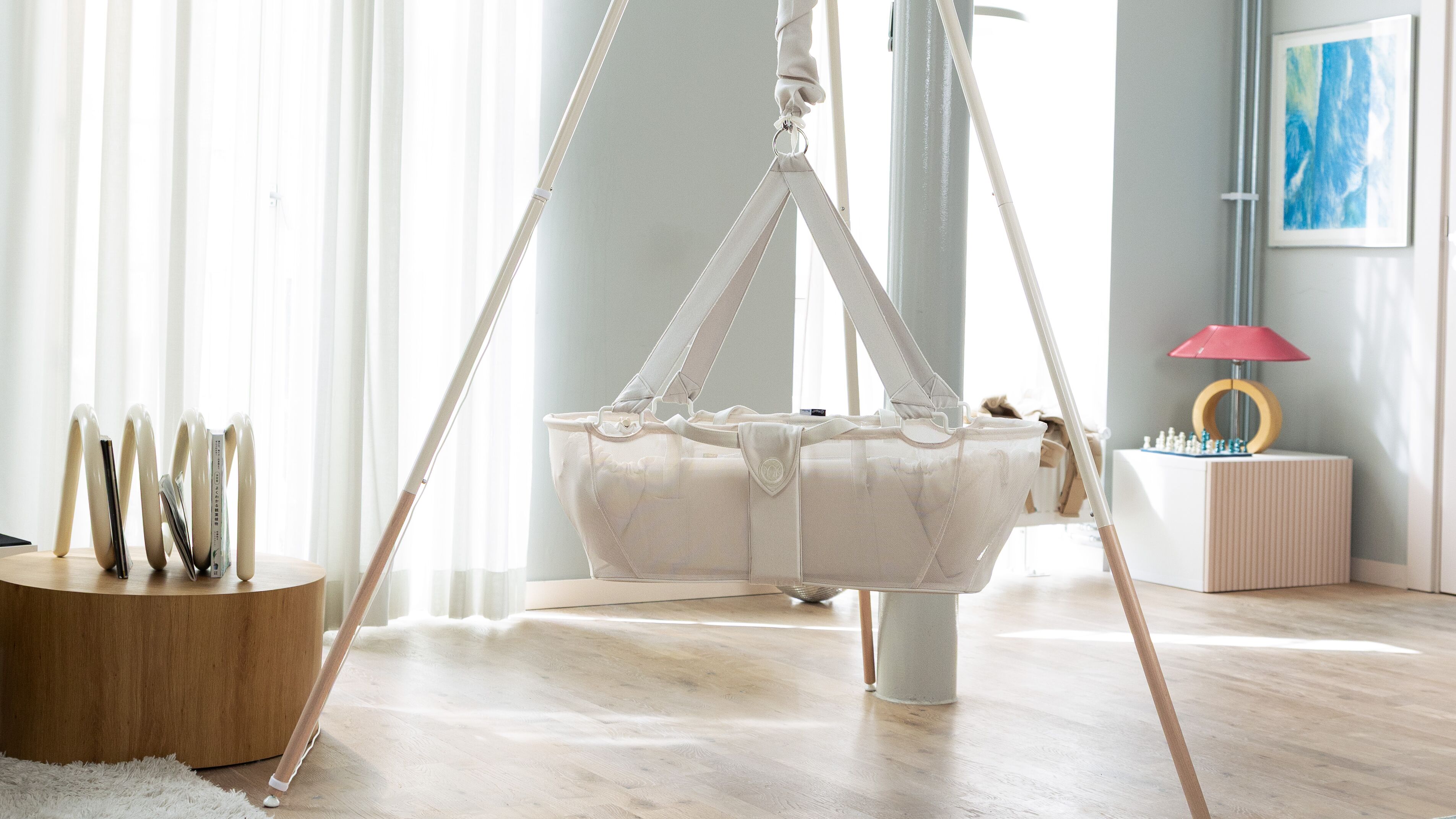
A design that holds its own. Baby furniture that fits into the rest of your home tends to share the same visual language as the furniture you already own. Natural materials – wood, linen, cotton mesh – sit comfortably next to a sofa or a bookshelf in a way that plastic and primary colours rarely do.
A smaller footprint than you think you need. The instinct when buying for a baby is to go bigger. More storage, more features, more surface area. But in practice, the products that earn permanent spots in your living room are the ones that don't dominate it. A freestanding frame with clean lines takes up space intentionally. A wide, bulky unit just takes up space.
Freestanding over fixed. Built-in or wall-mounted furniture commits you to one room. Freestanding pieces move with you – from the bedroom in the early weeks to the living room as your baby becomes more alert, to wherever makes sense as your routine evolves.
Which rooms does baby furniture actually end up in?
The honest answer is: all of them. The living room, the bedroom, the hallway at 6am when you're just trying to keep everyone calm. In the early months especially, your baby goes where you go – and the furniture that actually gets used is the furniture that's easy to move, looks right wherever it lands, and doesn't turn every room it enters into a nursery.
That's a harder brief than it sounds. But it's the right one to design for.
How does the Najell Rocker fit into this?
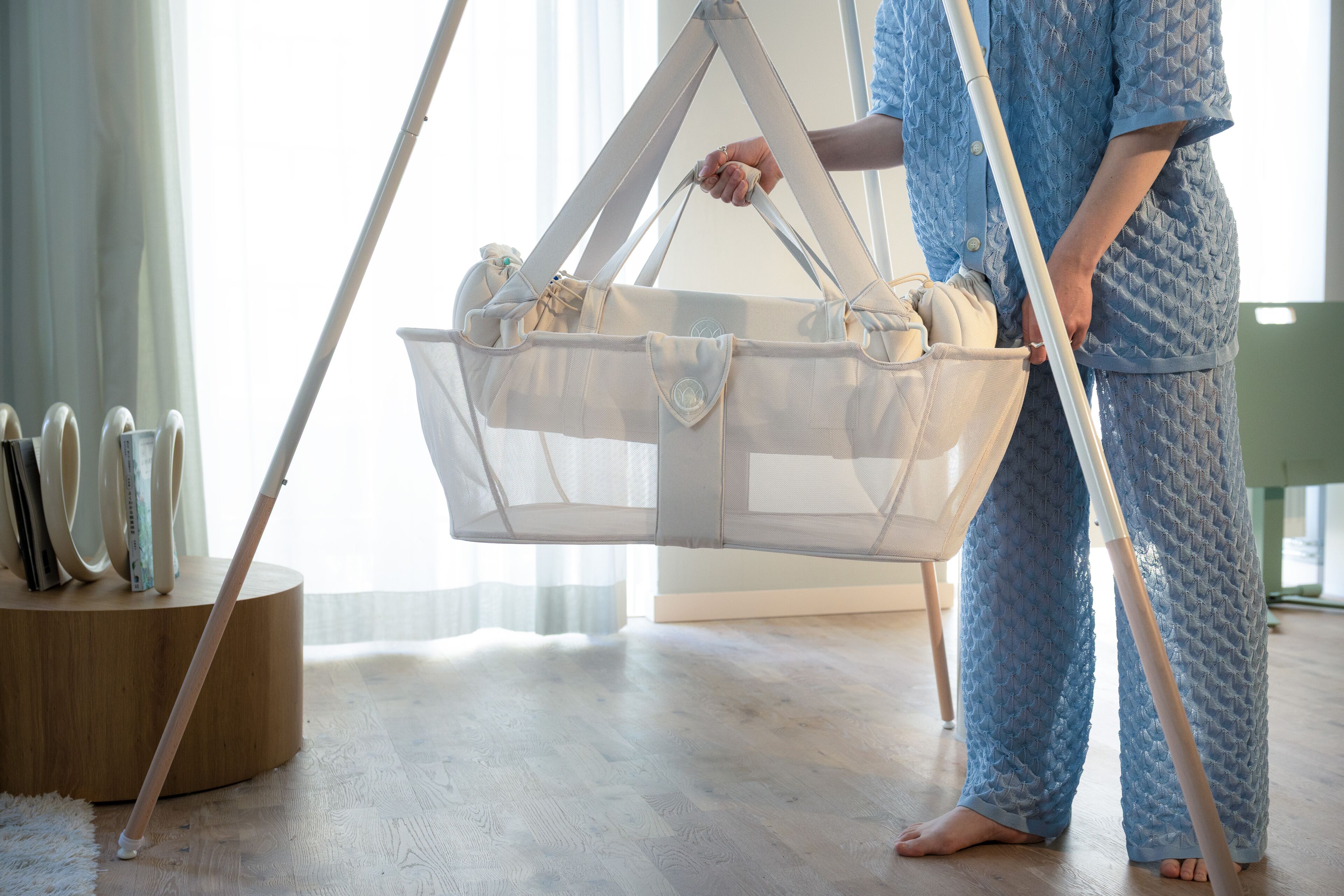
The Najell Rocker was designed with exactly this in mind. The freestanding stand in wood and metal has a Scandinavian aesthetic that works in a living room, a bedroom, or a kitchen without looking like it wandered in from a different home. It doesn't need a dedicated corner or a specific colour scheme to belong.
The open mesh cradle means you can see your baby from anywhere in the room – no hovering, no moving the whole thing closer. And because it's freestanding, it goes wherever you need it to be that day.
It's not trying to be the only piece of baby furniture you own. It's trying to be the one you actually want in the room.
Najell designs baby products that belong in your whole home. Not just the nursery.