)
Your complete sleep guide for the first months
You've just brought your baby home. The nursery is ready, the room is perfectly prepped. And then reality hits: your baby only wants to sleep on you, in the car, or in the pram. Sound familiar?
The truth is, great baby sleep isn't about the perfect setup. It's about flexibility, rhythm, and finding what works for your life. Here's our guide to making sleep smoother, for both of you.
Understand your baby's sleep needs
Newborns sleep a lot, up to 17 hours a day, but in short stretches of two to four hours at a time. That means sleep happens everywhere: on the go, at home, at grandma's, and yes, sometimes at 3am when you least expect it.
The good news? You don't have to plan your entire day around naps. With the right tools, sleep can follow you, not the other way around.
Why rocking works
There's a reason babies calm down the moment you start moving. The gentle swaying motion is deeply familiar, it's what they felt for nine months in the womb. Rocking lowers stress, slows breathing, and helps babies drift off faster and stay asleep longer.
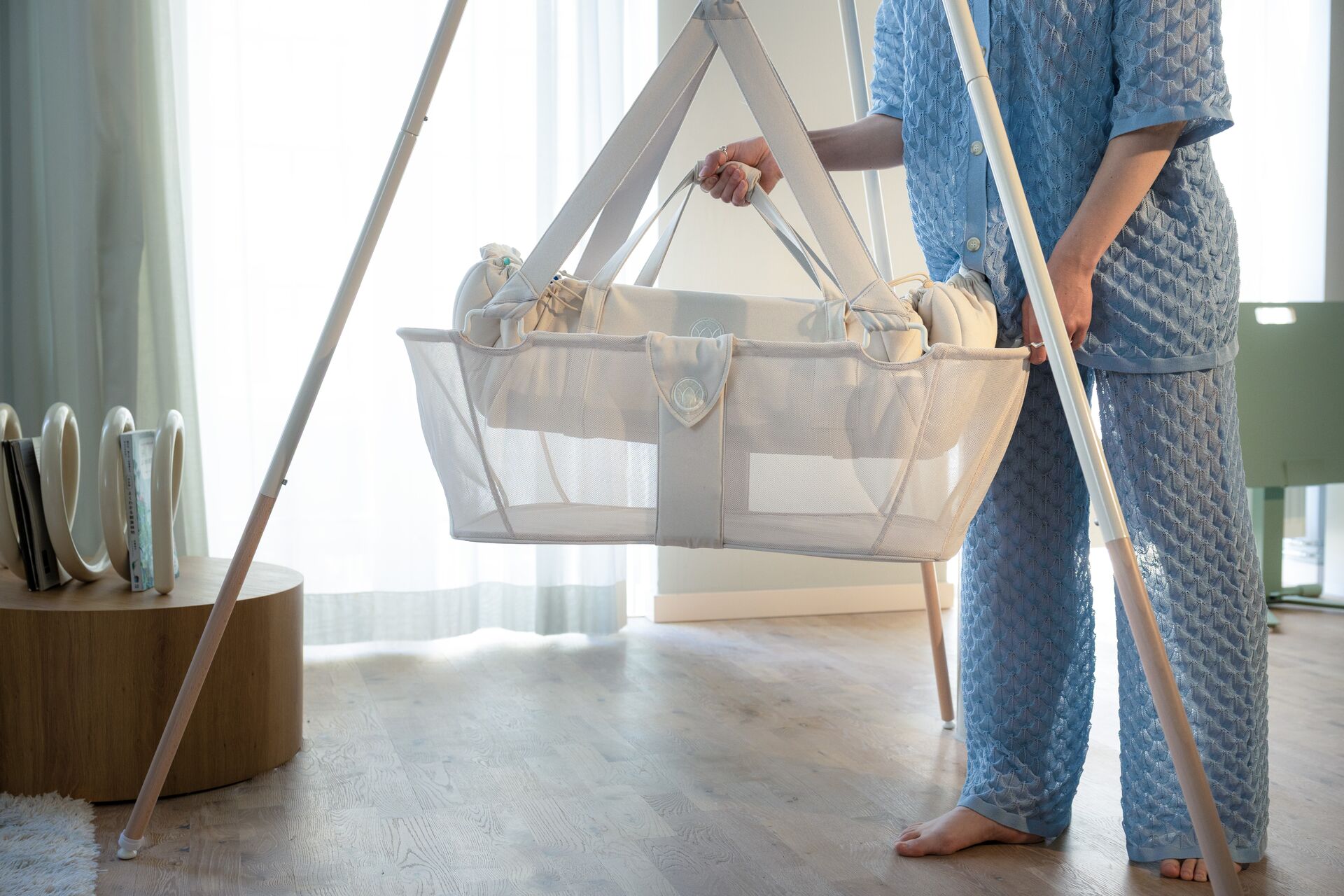
The Najell Rocker uses exactly this principle. As a hanging bassinet with a built-in motor, it keeps the gentle sway going so you don't have to. No bouncing on a yoga ball at midnight, no standing over the crib waiting for the moment you can sneak away. Just effortless, instinctive calm while you actually get to sit down.
The seamless transfer
If you've ever successfully transferred a sleeping baby and felt like an Olympic champion, you'll love this: All SleepCarrier-models fit directly into the Najell Rocker.
That means your baby can fall asleep in the SleepCarrier during your morning walk, and when you get home, you simply lift them, still sleeping, straight into the Rocker. The familiar nest goes with them. No cold mattress. No sudden stillness. No starting over.
It's the kind of detail that sounds small until it's 2pm and your baby is actually still asleep.
Take sleep with you
A big misconception is that babies should only sleep in one designated spot. In reality, making sleep portable is one of the smartest moves you can make as a new parent.
The SleepCarrier doubles as a babynest, a carry cot, and a play mat. Use it in the pram during your morning walk, bring it to a café, place it on the sofa while you have lunch, then drop it right into the Rocker when you're home. The familiar environment travels with your baby, so they settle faster wherever they are.
Build a simple bedtime rhythm
Babies thrive on predictability. You don't need an elaborate routine. Even small signals help your baby recognize that sleep is coming. A few ideas:
A short walk in the pram with the SleepCarrier before the evening nap
Dimming the lights and lowering noise as bedtime approaches
Putting on a sleeping bag as a consistent cue
A gentle push of the Rocker and a soft lullaby
Keep it simple. Keep it consistent. Over time, even a five-minute wind-down signals to your baby: it's time to sleep.
Don't fight the nap — work with it
One of the most common rookie mistakes (we've all been there) is trying to keep a tired baby awake during the day to get more sleep at night. It usually backfires. An overtired baby is harder to settle, not easier.
Instead, let your baby nap when they need to. Use the SleepCarrier to keep things flexible on the go, and the Rocker as your home base. Your day stays intact, and your baby gets the rest they need.
Your home base for sleep
At home, the Rocker gives your baby their own dedicated sleep space, one that gently moves with them rather than asking them to lie completely still. The consistency of coming back to the same spot, with the same gentle sway, helps build the sleep associations that make settling easier over time.
Pair it with the SleepCarrier for a seamless flow between life outside and rest at home. Less fuss, smoother transitions, more sleep for everyone.
A note for tired parents
There's no perfect approach to baby sleep. Every baby is different, and some nights will just be hard. But having the right setup, one that works with your baby's instincts rather than against them, takes at least some of the friction out of it.
Less fuss. More sleep. That's the goal.