)
Power People: Najell x Jennifer Berglund
Power People is a series of conversations with people who choose their own path. Together, we explore the choices, experiences and perspectives that shape who we are.
This time, we meet Jennifer Berglund – licensed midwife, mother of two and author of Den fjärde trimestern (The Fourth Trimester). She talks about the time after birth, about the recovery that is so often overlooked, and about the importance of giving your body time to heal.
You have worked in maternity care for many years and meet new mothers every day. What do you find new mothers most commonly underestimate about the fourth trimester?
Almost every mother I meet has prepared and read up a lot before giving birth, but then has no idea what to expect or what is normal in the time after. Many forget that they will most likely be exhausted after the birth, tired from sleep deprivation, experiencing pain in their bodies and from possible tears, and dealing with mood swings from hormones.
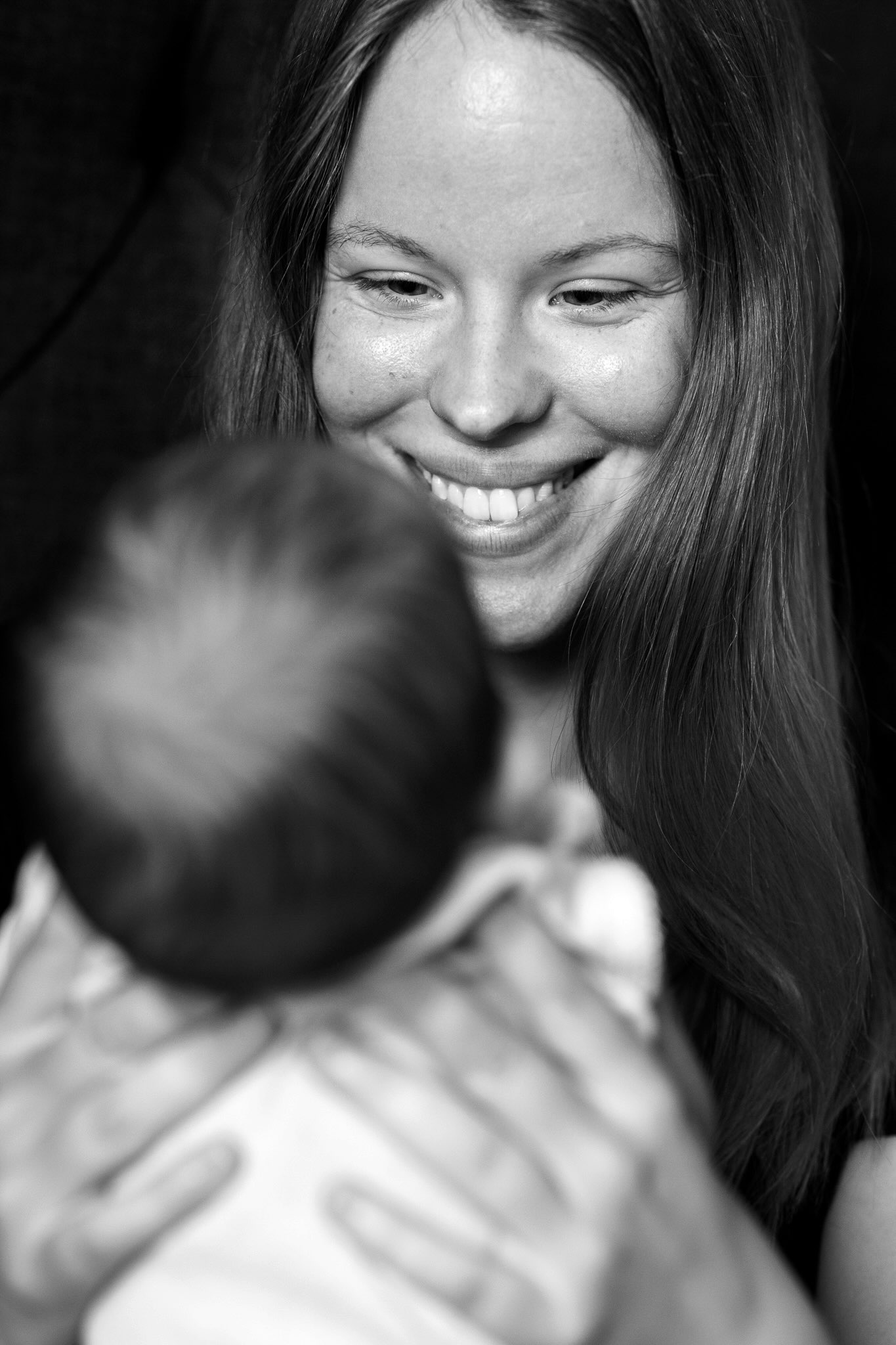 Jennifer Berglund, licensed midwife, mother and author. Photo: Private.
You are a mother of two yourself, and a midwife who meets new families every week. Did your perspective on the fourth trimester change when you went through it yourself?
I had a real advantage in that I already had all the knowledge. I knew roughly how the time after birth would feel, what challenges might come and what was normal and what wasn't. But despite that, I found that period quite lonely. It felt like I was suddenly on a completely different wavelength from everyone else, who just carried on with their normal lives, while my life, my body and my wellbeing had been so completely transformed.
"It felt like I was suddenly on a completely
different wavelength from everyone else."– Jennifer Berglund
The concept of "the fourth trimester" is still relatively unknown. Why do you think we talk so much about pregnancy but so little about the time that follows?
There is an idea that everything is about getting through the pregnancy and the birth, and that what comes after is just "the rest of your life." But that's not quite right. A birth, regardless of how it went or whether there were complications, is still a major event that the body needs time and space to recover from. It is often said that recovery takes as long as the pregnancy itself — nine months. I think that is something many people simply don't consider.
Many mothers describe a feeling that their body no longer feels like their own. How do you talk about that experience with the women you meet?
The term fourth trimester is meant to highlight that mother and baby are still deeply connected after birth, both physically and emotionally.
It can feel overwhelming for someone who was looking forward to having their body feel like their own again, only to find that it takes time. There is also an expectation of "returning to your body" — as if you left something behind when you became pregnant and now need to go back to it.
It can be reassuring to know that recovery takes time, and that it is not about returning to anything. It is more about getting to know your body again. And being forgiving toward a body that has done the incredible work of creating, birthing and feeding a new little person. Of course it is a huge transition.
"It's not about returning to something
— it's about getting to know your body again."
– Jennifer Berglund
In the book you weave together facts and real mothers' experiences. How important is it to normalise experiences that rarely appear on social media?
I think many people expect to immediately fall into that rosy newborn bubble the moment their longed-for baby arrives. But for most people, it doesn't feel that way. The body is physiologically programmed to prioritise the essentials first: hunger, thirst, sleep and pain relief. Feelings of joy come further down that list. So it is not surprising that it can be hard to enjoy the time after birth.
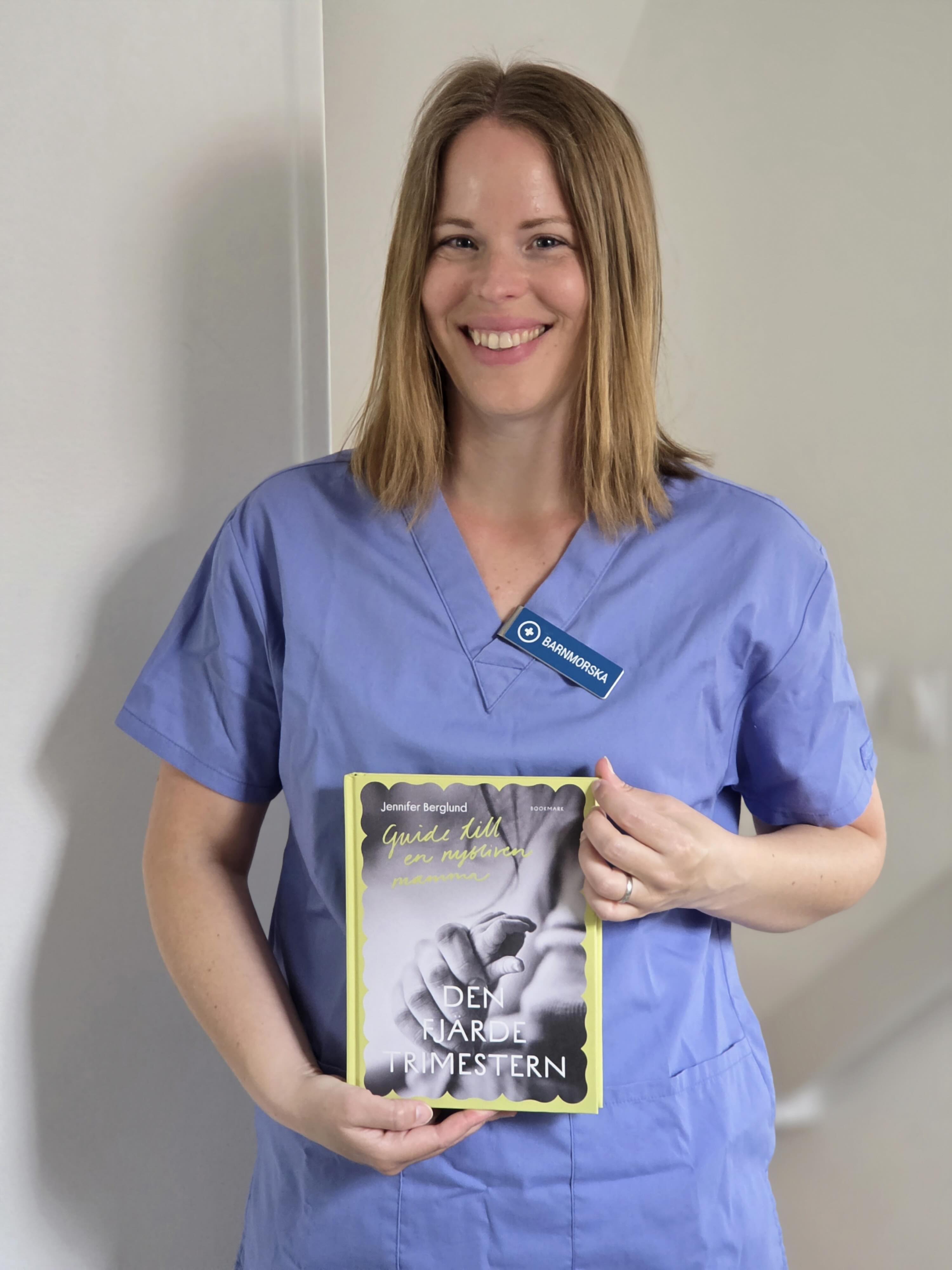 Jennifer Berglund and her book Den fjärde trimestern (The Fourth Trimester). Photo: Private.
You are both a midwife and an author. What can a book offer that a stay in maternity care cannot?
I wish every person who gives birth could have access to all the information in the book. Every new mother deserves that. At the same time, the time in maternity care is often short, and new parents are frequently overwhelmed, finding it hard to take in too much at once. I hope the book can work as a complement — like a steady hand to hold when things feel hard.
If you could give every new mother one thing to carry with her — not about her body, but about how she sees herself — what would it be?
I wish they could look at themselves with the kindest eyes possible. What an achievement, to have brought a child into the world. They deserve to rest and take it slowly. The fourth trimester deserves to take up space, rather than feeling pressured to return to normal life before the body and mind have had the chance to catch up.
Three quick tips for new parents
Let the fourth trimester be a time for healing.
Take it easy and be kind to yourself and your body.You don't have to enjoy every moment with a newborn.
It is okay if it feels difficult. Even small glimpses of joy matter.Don't forget yourself.
To be a good parent, you need to take care of yourself, too.
Continue reading
More conversations from Power People:
Tobias Richter — On care, identity, and choosing your own path.
Nadiakenza — On honesty, motherhood, and life with three.
Emma Igelström — On resilience, recovery, and finding balance.
Explore the series
Power People Picks
Selected favourites inspired by the conversation