
When is my toddler ready to move out of the Crib?
Just like with many things in life, there's rarely a predictable day when it happens. One week your toddler is happily curled up where they've always slept, and the next they're testing the edges of the crib like it's a climbing wall. So how do you actually know it's time to make the switch from crib to a bed? And what’s good to think about when you do?
There's no universal right age
It's less about a set age or time and more about your child. As a general guide, most cribs are built for the newborn stage, until your baby weighs around 9 kg or starts to sit or roll over on their own. From there, an extendable crib can grow right along with them, turning into a longer bed built to last until roughly five years old, instead of you having to buy a completely new one.
That's the idea behind Najell's crib and bed collection: design that's made to fit your home — and your child's changing needs — for years, not months. So that it adjusts to your life, not the other way around.
Signs it might be time to shift from crib to bed
So if you’re not going to switch from a crib to a bed based strictly based on age, what could be things that indicate that it’s time for a change? There are a few everyday signs worth noticing in your child, beyond the numbers:
Your child is climbing out, or trying to. Usually the clearest signal of all, no matter the age.
Your child is asking for a "big kid" bed. A completely normal (if sometimes premature) request once they notice what siblings or friends sleep in.
Nights feel cramped, with more rolling and kicking than the space allows.
When it’s time, the Najell Crib easily transforms into a bed with the Crib Extension.
Tips for a smoother transition
Once you've decided it's time, a few small choices can make the switch feel like a natural next step rather than a big disruption:
Keep the same bed, not just the same room. For example with the Najell Crib and Crib Extension. This is the easiest win of all — because your toddler bed is an extension of the crib they already know, the mattress, the mesh sides, and the surroundings stay familiar. Less new to adjust to means less resistance at bedtime.
Involve your toddler in the change. Let them help pick out new bedding, choose where a favorite stuffed animal goes, or "test" the bed together during the day. A little ownership goes a long way toward making it feel exciting rather than imposed.
Keep the routine identical. Same bath, same book, same song, same goodnight — only the bed itself is different. Consistency is what tells your child's body it's time to wind down, regardless of what the bed looks like.
Make the first nights low-pressure. Some toddlers settle in immediately; others take a week or two of extra tuck-ins. Both are completely normal. If naps or early mornings look a little different at first, give it time before assuming something's wrong.
Extend, don't rush, if you're not sure. If your toddler seems unsettled after the switch, there's no rule saying you can't keep the crib side closed a little longer, or ease into the open side gradually. The bed is designed to adapt at your pace, not the other way around.
Move it, don't replace it, if your setup changes. Rearranging a room or switching who sleeps where? Because the bed is easy to move, you can shift it to a new spot without disrupting the sleep space itself.
The goal isn't a perfect transition — it's a familiar one. Most of what makes a big kid bed feel safe to a toddler isn't the bed at all; it's everything around it staying the same.
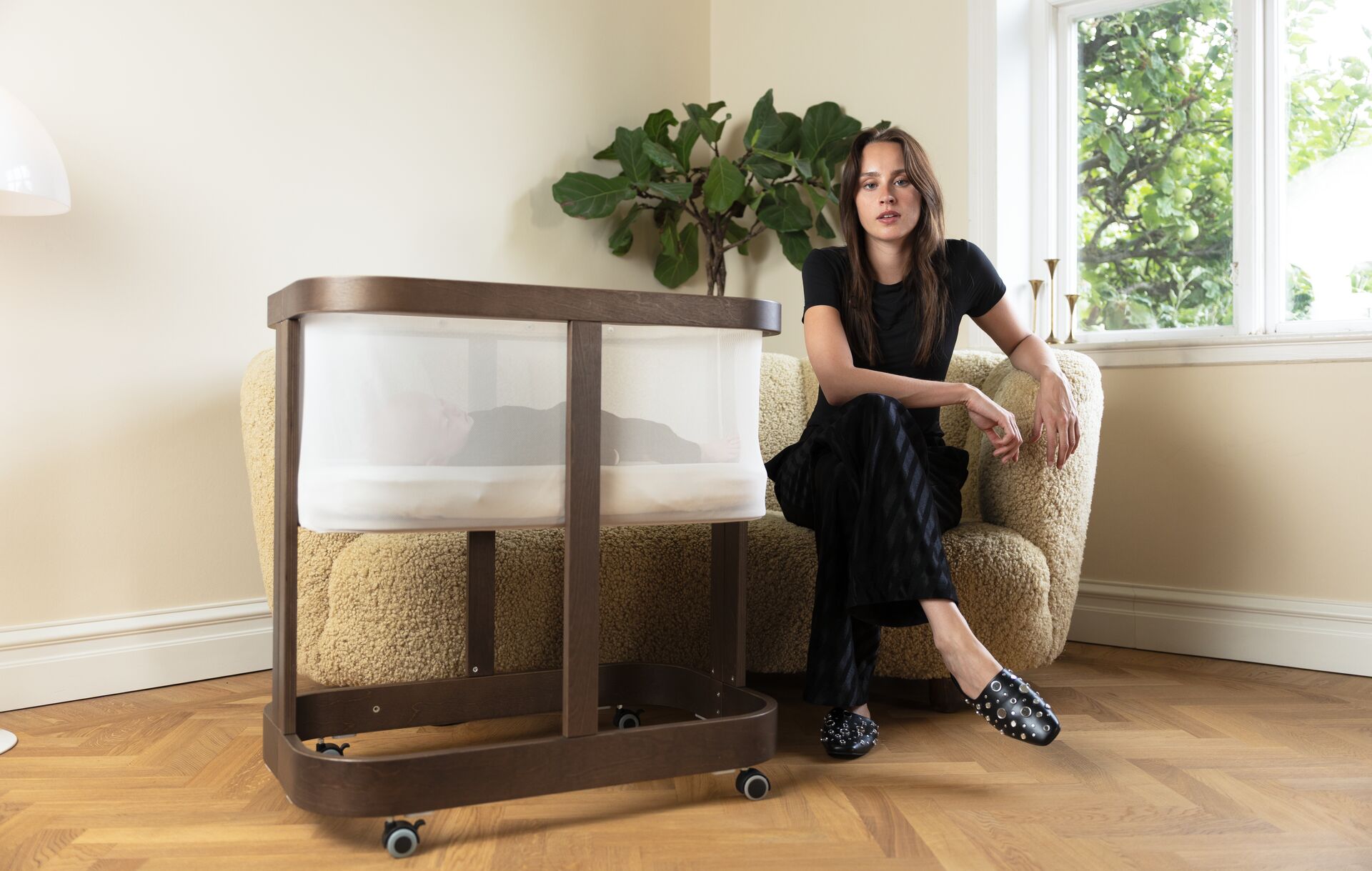
One bed, from newborn to toddler
A crib with a matching extension - often called a toddler bed conversion kit - turns your existing crib into a longer bed. So the room, the routine, and the furniture your child already recognizes stay exactly the same, just extended. It's one bed that grows with your child from newborn to toddler, rather than a new bed, a new room, and a new routine all at once.
This is where the design really earns its keep. The breathable mesh sides that gave you full visibility during the newborn stage stay part of the picture as your child grows - one side can transition from closed to open as your toddler is ready for a little more independence, while the mesh continues to let air flow and let you keep an eye on them without hovering. It's the same familiar, comforting space they've always known, just adapted for where they are now.
And because the design is built for easy room-to-room mobility, the bed can move with your child and with your household rather than being one more fixed, heavy piece of furniture to work around.
If you're not sure yet, there's no harm in waiting
A toddler who's safe, sleeping well, and not climbing doesn't need to move just because a milestone chart says so. Every child finds their own rhythm, and the best time to switch is simply when it feels right for yours. So take it one step at a time, and find a way that works for your child and your family.
Curious whether your Najell crib is ready to grow with your toddler? Explore the extendable bed collection to see how it works.
When is my toddler ready to move out of the Crib?
Just like with many things in life, there's rarely a predictable day when it happens. One week your toddler is happily curled up where they've always slept, and the next they're testing the edges of the crib like it's a climbing wall. So how do you actually know it's time to make the switch from crib to a bed? And what’s good to think about when you do?
There's no universal right age
It's less about a set age or time and more about your child. As a general guide, most cribs are built for the newborn stage, until your baby weighs around 9 kg or starts to sit or roll over on their own. From there, an extendable crib can grow right along with them, turning into a longer bed built to last until roughly five years old, instead of you having to buy a completely new one.
That's the idea behind Najell's crib and bed collection: design that's made to fit your home — and your child's changing needs — for years, not months. So that it adjusts to your life, not the other way around.
Signs it might be time to shift from crib to bed
So if you’re not going to switch from a crib to a bed based strictly based on age, what could be things that indicate that it’s time for a change? There are a few everyday signs worth noticing in your child, beyond the numbers:
Your child is climbing out, or trying to. Usually the clearest signal of all, no matter the age.
Your child is asking for a "big kid" bed. A completely normal (if sometimes premature) request once they notice what siblings or friends sleep in.
Nights feel cramped, with more rolling and kicking than the space allows.
When it’s time, the Najell Crib easily transforms into a bed with the Crib Extension.
Tips for a smoother transition
Once you've decided it's time, a few small choices can make the switch feel like a natural next step rather than a big disruption:
Keep the same bed, not just the same room. For example with the Najell Crib and Crib Extension. This is the easiest win of all — because your toddler bed is an extension of the crib they already know, the mattress, the mesh sides, and the surroundings stay familiar. Less new to adjust to means less resistance at bedtime.
Involve your toddler in the change. Let them help pick out new bedding, choose where a favorite stuffed animal goes, or "test" the bed together during the day. A little ownership goes a long way toward making it feel exciting rather than imposed.
Keep the routine identical. Same bath, same book, same song, same goodnight — only the bed itself is different. Consistency is what tells your child's body it's time to wind down, regardless of what the bed looks like.
Make the first nights low-pressure. Some toddlers settle in immediately; others take a week or two of extra tuck-ins. Both are completely normal. If naps or early mornings look a little different at first, give it time before assuming something's wrong.
Extend, don't rush, if you're not sure. If your toddler seems unsettled after the switch, there's no rule saying you can't keep the crib side closed a little longer, or ease into the open side gradually. The bed is designed to adapt at your pace, not the other way around.
Move it, don't replace it, if your setup changes. Rearranging a room or switching who sleeps where? Because the bed is easy to move, you can shift it to a new spot without disrupting the sleep space itself.
The goal isn't a perfect transition — it's a familiar one. Most of what makes a big kid bed feel safe to a toddler isn't the bed at all; it's everything around it staying the same.
One bed, from newborn to toddler
A crib with a matching extension - often called a toddler bed conversion kit - turns your existing crib into a longer bed. So the room, the routine, and the furniture your child already recognizes stay exactly the same, just extended. It's one bed that grows with your child from newborn to toddler, rather than a new bed, a new room, and a new routine all at once.
This is where the design really earns its keep. The breathable mesh sides that gave you full visibility during the newborn stage stay part of the picture as your child grows - one side can transition from closed to open as your toddler is ready for a little more independence, while the mesh continues to let air flow and let you keep an eye on them without hovering. It's the same familiar, comforting space they've always known, just adapted for where they are now.
And because the design is built for easy room-to-room mobility, the bed can move with your child and with your household rather than being one more fixed, heavy piece of furniture to work around.
If you're not sure yet, there's no harm in waiting
A toddler who's safe, sleeping well, and not climbing doesn't need to move just because a milestone chart says so. Every child finds their own rhythm, and the best time to switch is simply when it feels right for yours. So take it one step at a time, and find a way that works for your child and your family.
Curious whether your Najell crib is ready to grow with your toddler? Explore the extendable bed collection to see how it works.