)
Best baby carrier for newborns: Wrap vs carrier vs sling
When welcoming a newborn, keeping them close is not just a desire; it’s a need. Babywearing supports bonding, emotional development, and helps soothe your baby. But with so many options out there, how do you know which baby carrier is best for your newborn?
Here’s a quick guide to help you decide.
Different types of baby carriers
Baby wraps for newborns
A baby wrap is a long piece of fabric that you tie around your body to create a snug, womb-like environment. It’s ideal for skin-to-skin contact and early bonding moments.
Pros:
+ Ideal for skin-to-skin contact, which has positive effects for both you and your baby
+ Provides a snug, womb-like environment
+ A soft way to carry, perfect for those moments at home
+ Offers ergonomic support and a customized fit
Cons:
- Wrapping and tying can feel intimidating to new parents
- Less suitable for older babies
Best for:
The fourth trimester and calm at-home carrying.
Try the Najell Wrap:
Our pre-tied wrap offers all the benefits of a traditional wrap, without the hassle of tying. Just slip it on and start bonding. 
Baby slings for newborns
A sling is worn over one shoulder, creating a pouch for your baby. It’s lightweight and easy to use, but it offers less full-body support.
Pros:
+ Easy to put on
+ Lightweight and portable
Cons:
- May lack full support for a newborn
- Can place uneven pressure on one shoulder
- Some slings don’t meet safety standards
Best for:
Short, calm carrying sessions at home and experienced parents who prefer simplicity.
Structured baby carriers for newborns
Structured carriers have padded straps and buckles. They’re practical, ergonomic, and grow with your baby.
Pros:
+ Usually quick to put on
+ Supportive for both parent and baby
+ Long-term investment (often used from newborn to toddler)
Cons:
- Less intimate feel compared to wraps
- Some models require newborn inserts for proper positioning
Best for:
Everyday babywearing and longer-term support.
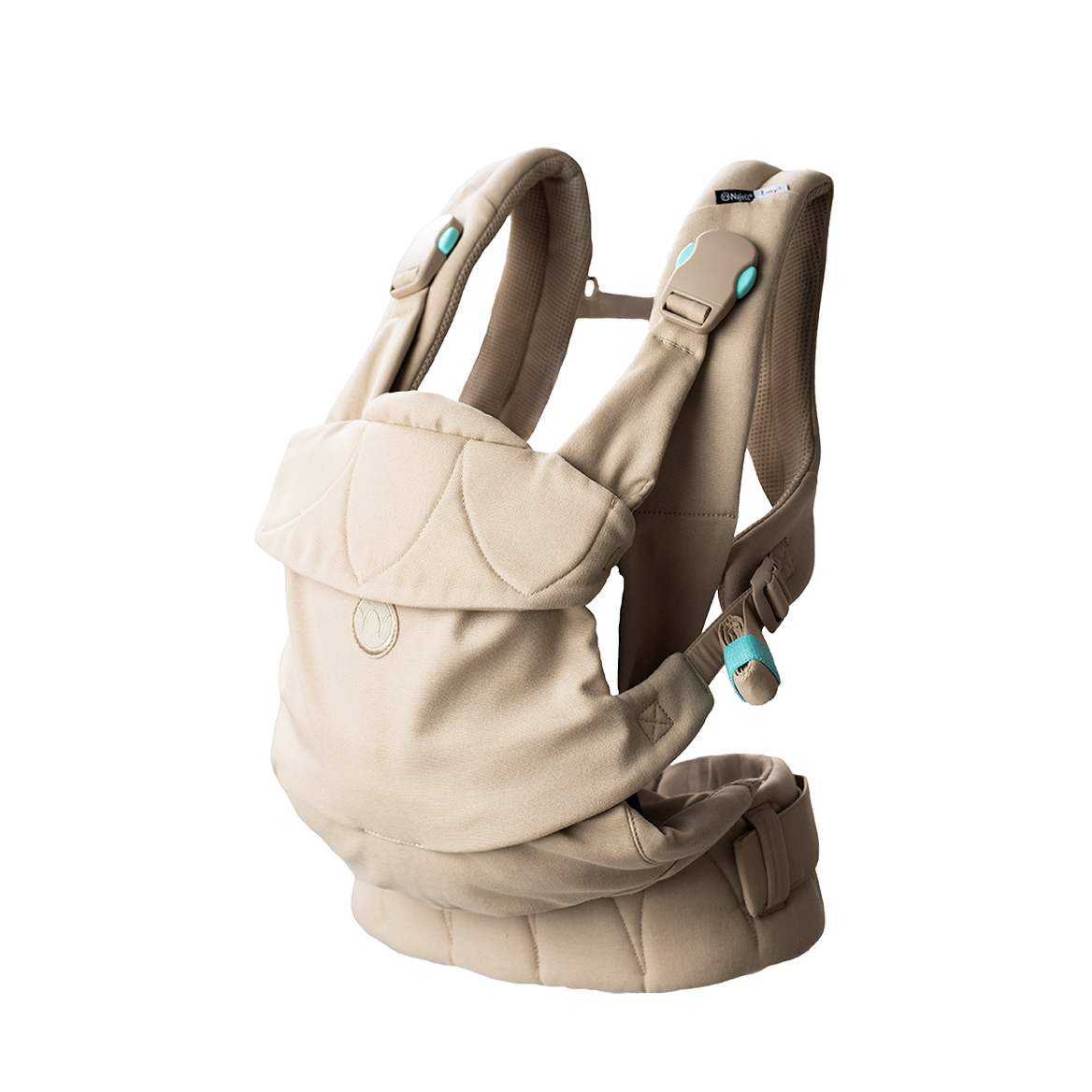
Try Najell Easy, Najell Rise, or Najell Original:
All three support newborns without inserts. With magnetic buckles, minimal settings, and multiple carry positions, they’re simple, ergonomic, and built to grow with your baby.
What about hip seat carriers?
Hip seat carriers are suitable from 6 months, offering a padded seat and better weight distribution.
Read more: When and why to use a hip seat carrier
Pros:
+ Reduces strain on your back and shoulders
+ Great for quick ups and downs with older babies
Cons:
- Not designed for newborns or babies who can’t sit up on their own
- Less supportive for long walks or longer carry sessions
Best for:
Confident sitters (6 months+) who enjoy short bursts of carrying or want a better view.
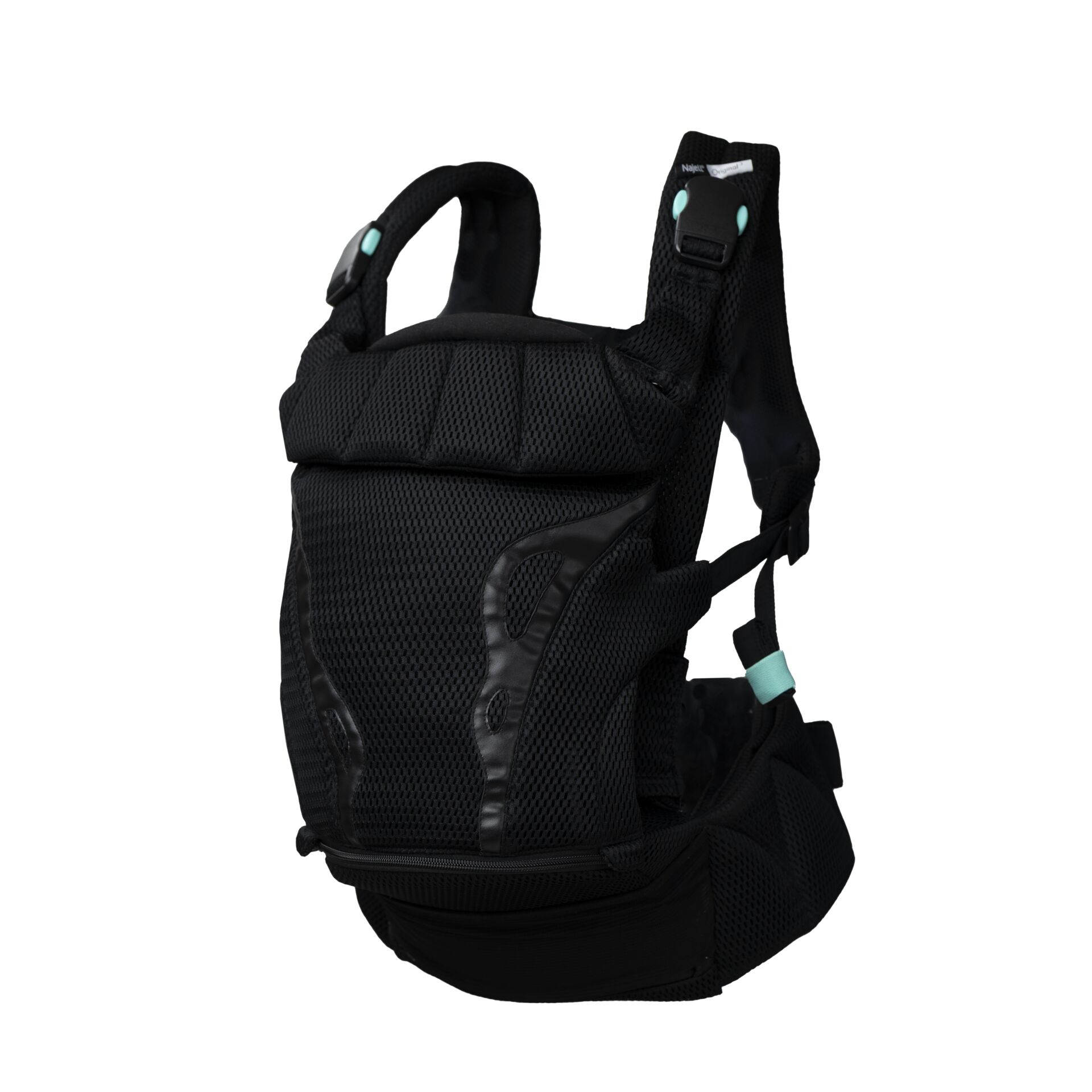
Try Najell Original:
The Najell Original can be used as a pure hip seat by removing the upper part entirely.
What to think about when carrying a newborn
When using any baby carrier, always make sure your newborn is safe and well-supported. No matter which style you choose:
✓ Keep your baby high and visible
✓ Ensure their airways are always clear
✓ Support the head, neck, and spine
✓ Position legs in the M-shape for healthy hip development
Follow the T.I.C.K.S. rules for safe babywearing for peace of mind.