)
How safe are baby nests really?
If you've been scrolling baby gear at 2am wondering whether that cosy little nest everyone's using is actually safe, you're not alone. It's one of the most common questions new parents ask - and a good one to ask, because baby nests come in a huge range of designs, and not all of them are built with the same care.
The short answer: a well-designed baby nest, used the way it's intended, can be a lovely part of your baby's routine. The details matter, though - so let's walk through what the research says and what to look for, so you can make the choice that feels right for your family.
What is a baby nest, exactly?
A baby nest (sometimes called a baby pod or portable bassinet-style nest) is a small, cushioned space with raised, soft sides - designed to give your baby a cosy, contained spot to rest during the day, for supervised naps, or while travelling. They're popular because they're portable, familiar-feeling for newborns, and easy to move from room to room.
It's worth knowing that "baby nest" isn't a single, regulated product category - it covers everything from simple padded mats to structured, certified sleep products. That variation is exactly why the safety picture can feel confusing.
What does the research actually say?
Research is updated all the time, but here's the current picture:
Independent, unsupervised overnight sleep is where most safety guidance gets specific. Pediatric bodies such as the American Academy of Pediatrics recommend babies sleep on a firm, flat, non-inclined surface, in a certified crib or bassinet, for all sleep - including naps - up to at least 12 months. This is in line with June 2021 Consumer Product Safety Commission rules requiring infant sleep products to meet existing federal safety standards for cribs, bassinets, play yards, and bedside sleepers.
Soft sides matter. Very soft, plush, or pillow-like edges can pose a suffocation risk if a baby's face presses against them, which is why some health authorities - including Canada's - have specifically flagged softer-sided nest products as a concern.
Bed-sharing is the bigger risk factor, not the nest itself. Research consistently shows the risk of infant death rises significantly when bed-sharing, particularly with a baby under four months old. A nest placed inside an adult bed doesn't fully remove that risk, because adults can still roll onto the soft edges, or bedding can shift over the nest.
The evidence base is still developing. Even major pediatric bodies acknowledge there isn't yet enough published evidence to make a firm recommendation for or against alternative sleep surfaces as a category — which is part of why guidance varies so much between countries and even between individual doctors.
None of this means baby nests are "unsafe" across the board. It means the specific product, and how and where you use it, are what really determine the risk - not the category itself.
How to choose a safer baby nest
A few things worth checking before you buy (or before you keep using one you already have):
Firm, supportive base rather than deeply plush or memory-foam-style padding
Slimmer sides, not thick pillow-like walls your baby's face could press into
Breathable, tightly-woven fabric rather than loose or fluffy materials
Certification or compliance labelling for your region's infant sleep product standards
Clear manufacturer guidance on where and how long it's meant to be used
Where a baby nest fits best
Most safety guidance points to the same sweet spot: a baby nest works well for supervised daytime rest - on the sofa while you're right there, in the same room while you get things done, or as a familiar space in a travel cot or pram. For unsupervised overnight sleep, a certified crib or bassinet with a firm, flat mattress remains the setup pediatric guidance points to most consistently.
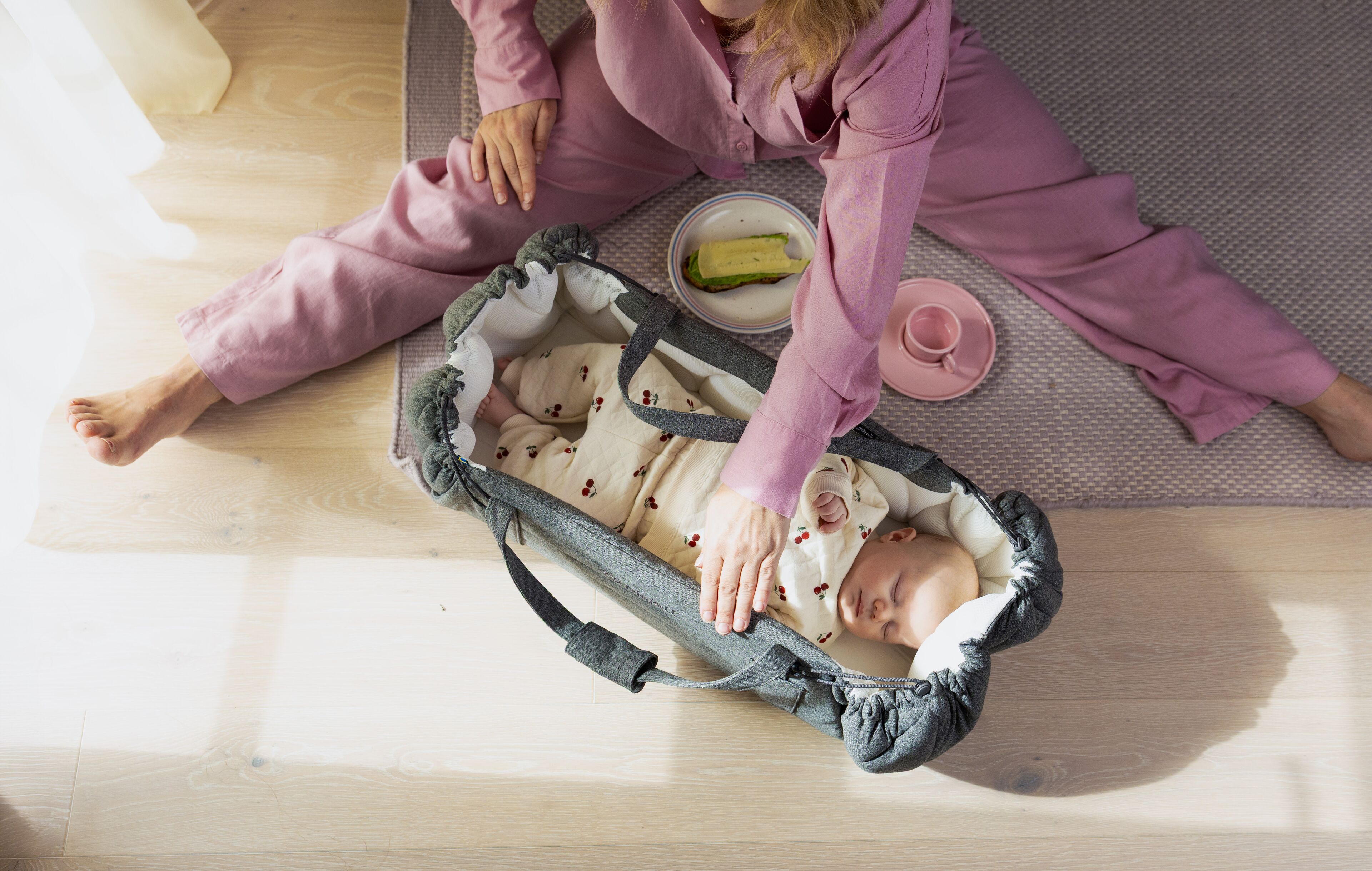
That's also where a nest-and-carrier hybrid like Najell's SleepCarrier can be genuinely useful - it's designed to move with you between the pram, the car, and supervised moments at home, so your baby stays in one familiar, portable space during the day, while their overnight sleep still happens in a proper crib or bassinet. It's less about replacing safe sleep basics and more about having one comfortable space that travels well.
Frequently asked questions
Can my baby sleep in a baby nest all night? Most current pediatric guidance recommends a certified crib, bassinet, or play yard with a firm, flat surface for all unsupervised sleep, including overnight. A baby nest is generally better suited to supervised daytime rest.
Is it safe to put a baby nest in my bed? This is where the most caution is warranted. Bed-sharing carries its own risks regardless of what's inside the bed with your baby, and a nest doesn't fully remove those risks. If you're bed-sharing or considering it, it's worth talking it through with your midwife or pediatrician, who can help you weigh your specific circumstances.
What should I avoid in a baby nest? Very soft or pillow-like sides, loose or fluffy filling, and unbranded products with no safety certification are the main things to look out for.
Are baby nests good for travel? Yes — this is where they genuinely shine. A familiar, portable space can help babies settle for supervised naps away from home, in the car, or on the go.