How long does breast milk last?
Building up a stash of pumped milk gives you options — a partner or grandparent can take a feed, you can get a few hours to yourself, or you're back at work and need milk ready for daycare. However you got there, the question that follows is almost always the same: how long is this actually good for?
The honest answer is that it depends on where you're storing it. Below are the current storage guidelines, along with the everyday situations — thawing, warming, leftovers — that the basic chart doesn't always cover.
How long breast milk lasts, by storage method
There's no need to memorize all of this. Bookmark the page, or just come back when you need it.
Room temperature (up to 25°C / 77°F): up to 4 hours
Insulated cooler bag with ice packs: up to 24 hours
Refrigerator (back of the fridge, not the door): up to 4 days
Freezer (standard fridge-freezer): up to 6 months for best quality, up to 12 months is acceptable
Thawed milk, kept in the fridge: up to 24 hours
Thawed milk, at room temperature: 1–2 hours
Leftover from a feeding, baby didn't finish: use within 2 hours
A few things worth knowing about these numbers:
They're a ceiling, not a target. Milk doesn't need to sit for the full 4 days to be "used properly" — using it sooner simply means better quality.
The fridge door is the one place to avoid. Temperature there swings every time the door opens, so keep milk toward the back instead.
Thawed milk should never go back in the freezer. If it's still got ice crystals in it, it's not fully thawed yet and can safely go back — but once it's completely liquid, that window has closed.
Freezing milk without losing quality
If you're building a freezer stash rather than using milk right away, a little bit of care up front makes a real difference:
Cool freshly pumped milk in the fridge first, then move it to the freezer — going straight from body temperature to frozen isn't necessary and can affect quality.
Freeze in small batches (around 60–120ml, or whatever one feeding typically looks like for your baby) so you're not thawing more than you need.
Leave a little space at the top of the container — milk expands slightly as it freezes.
Label everything with the date you pumped it, and use the oldest milk first.
Thawing and warming milk
The gentlest way to thaw frozen milk is overnight in the fridge. If you need it faster, hold the container under cool, then gradually warmer, running water, or set it in a bowl of warm water.
A couple of things to skip entirely:
The microwave. It heats unevenly and can create hot spots that burn your baby's mouth, even when the milk itself feels fine to the touch.
Refreezing. Once milk is fully thawed, that's its one window of use — in the fridge or at room temperature, whichever applies.
Milk doesn't need to be warmed at all, by the way. Plenty of babies are perfectly happy with it straight from the fridge.
Frequently asked questions
Can I mix freshly pumped milk with milk that's already been stored? Yes — just cool the fresh milk in the fridge first before combining it with milk that's already refrigerated or frozen, so you're not warming up the older batch.
Does breast milk that's gone off look or smell different? Sometimes, but not always. Milk that's separated into layers is completely normal — a gentle swirl (not a shake) mixes it back together. If it smells sour or rancid, trust your nose and skip it.
Is it safe to travel with pumped milk? Yes, with an insulated cooler bag and ice packs — that keeps milk safely cold for up to 24 hours, which covers most travel days.
You don't need to get it perfect
Storage guidelines exist to keep your baby safe, not to add another thing to feel anxious about. Once labelling, cooling, and the "no microwave, no refreezing" rules become habit, the rest tends to take care of itself.
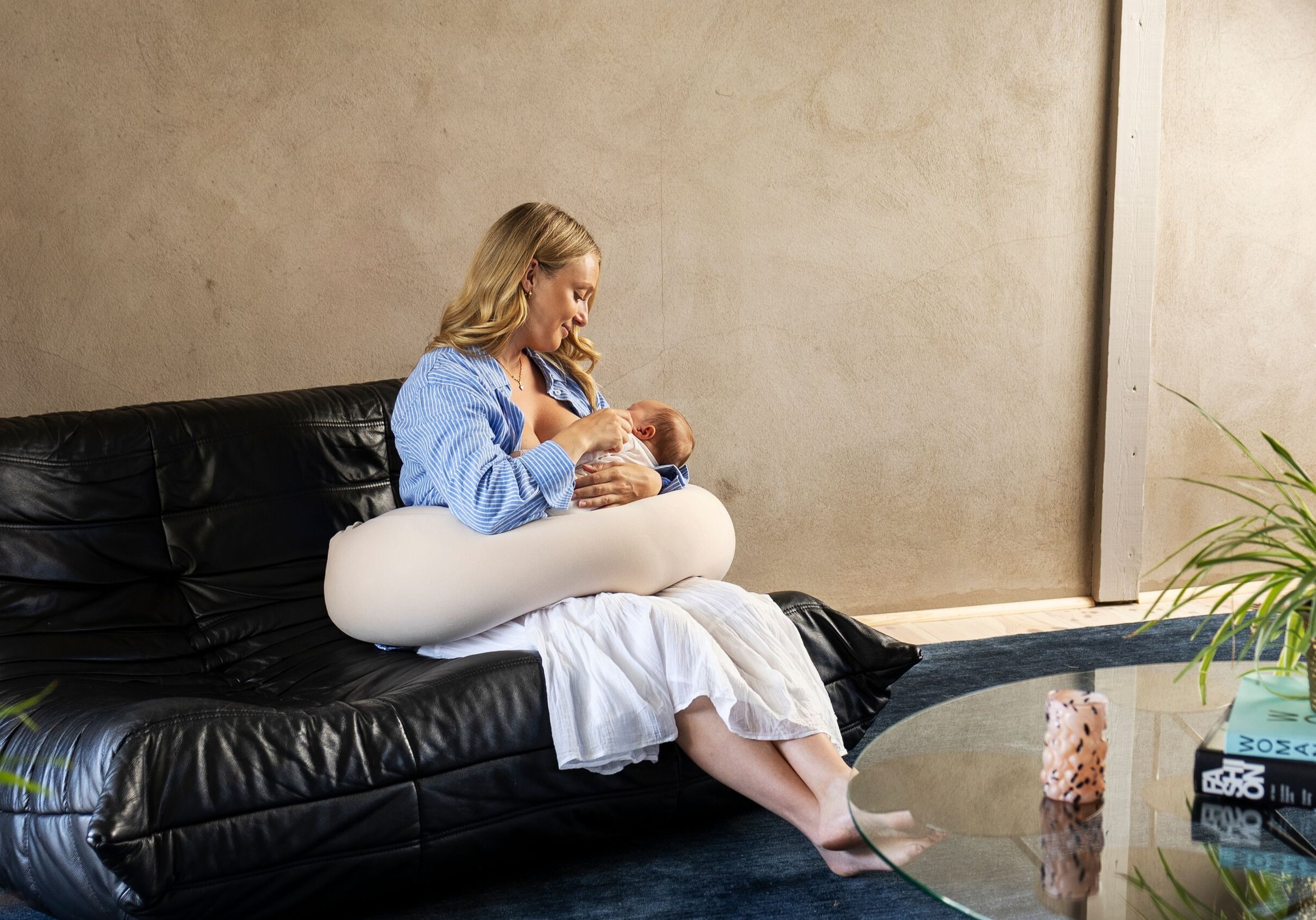
And if breastfeeding itself — not just the storage side of it — feels harder than expected some days, you're far from alone. It's worth revisiting what actually matters for your baby's health, minus the pressure. If you're pumping regularly, a supportive space to feed or express in can help too. The Najell Pregnancy Pillow is designed to give proper support during breastfeeding sessions, at home or wherever you end up feeding.