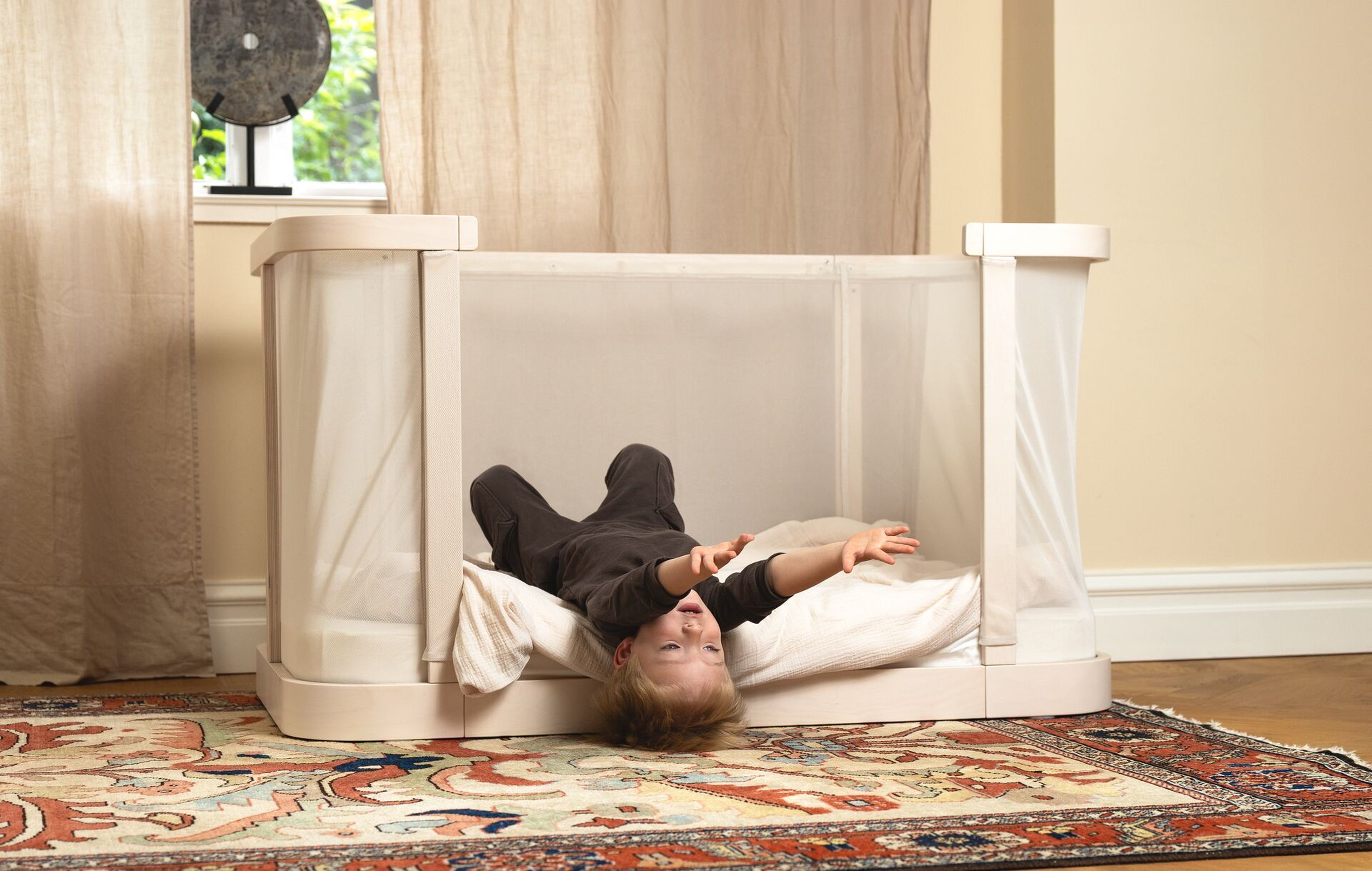
Should I use open or closed sides for the Najell Bed? Here's when to switch
The Najell Bed can be set up two ways, closed sides or open sides, and the right one depends on where your toddler is right now, not on age alone. Here's how to tell which one fits.
Closed sides work well to start
When you first set the bed up, a padded closed side often makes the most sense. It creates a soft barrier around your toddler, cushioning the everyday bumps that come with a more active sleeper, while the mesh construction still lets air move freely and keeps your toddler in full view. There's no urgency to switch it over right away, closed sides work perfectly well until your toddler actually starts wanting more.
Open sides once independence kicks in
As your toddler becomes more capable, climbing, testing boundaries, wanting to do things alone, the open side becomes the better fit. It lets them climb in and out of bed by themselves, while everything else, the mattress, the shape, the room, stays exactly the same. Nothing changes except how they get in.
How to know you're at that point
The clearest sign is the most literal one: your toddler actively trying to climb out on their own, or over the side if it's closed. That's usually a good moment to switch to the open side rather than waiting, since the goal is giving them a safe way to do what they're already trying to do.
One bed, two configurations
Switching between closed and open sides is a simple configuration change, not a new mattress, a new frame, or a new room setup. The bed itself stays exactly the same, only the sides change to match where your toddler is.