Baby Gear
"My baby isn't sleeping" - 10 tips to help your baby sleep better
Newborns sleep about 16 to 17 hours a day – but often only an hour or two at a time. So if you're wondering how to help your baby sleep better, you're in good company. The good news: Small, simple habits can make a real difference, for your baby and for you.
In short, here's how to help your baby sleep better:
Keep a calm, predictable bedtime routine
Dress your baby for the room, not for the cold outside
Help your baby tell day from night
Watch for sleepy and hungry cues
Put your baby down on their back, in a safe sleep space of their own
Below, we go through all 10 tips in more detail. If you ever suspect your baby is unwell, or their sleep worries you, always trust your gut and talk to your pediatrician.
1. Create a calming bedtime routine
It's not just us adults who benefit from routines – babies do too. Doing the same few things in the same order every night tells your baby that sleep is coming. Try a bath, a feed, a story or the same quiet song.
A baby sleeping bag is a lovely part of the routine. Zipping your baby into it each time they're due for sleep becomes a cue that it's time to wind down, and it keeps them comfortably covered without loose blankets.
2. Dress your baby for the room temperature
We all sleep better when we're comfortable, and babies are no different. A good rule of thumb: Think about how you're dressed, and choose your baby's sleepwear to match the room. Avoid overbundling, and skip hats indoors while your baby sleeps. A baby sleeping bag with a removable insert makes it easy to add or take away warmth as the evenings change.
Read more: What should my baby wear for bed underneath a sleeping bag?
3. Carry your baby close during the day
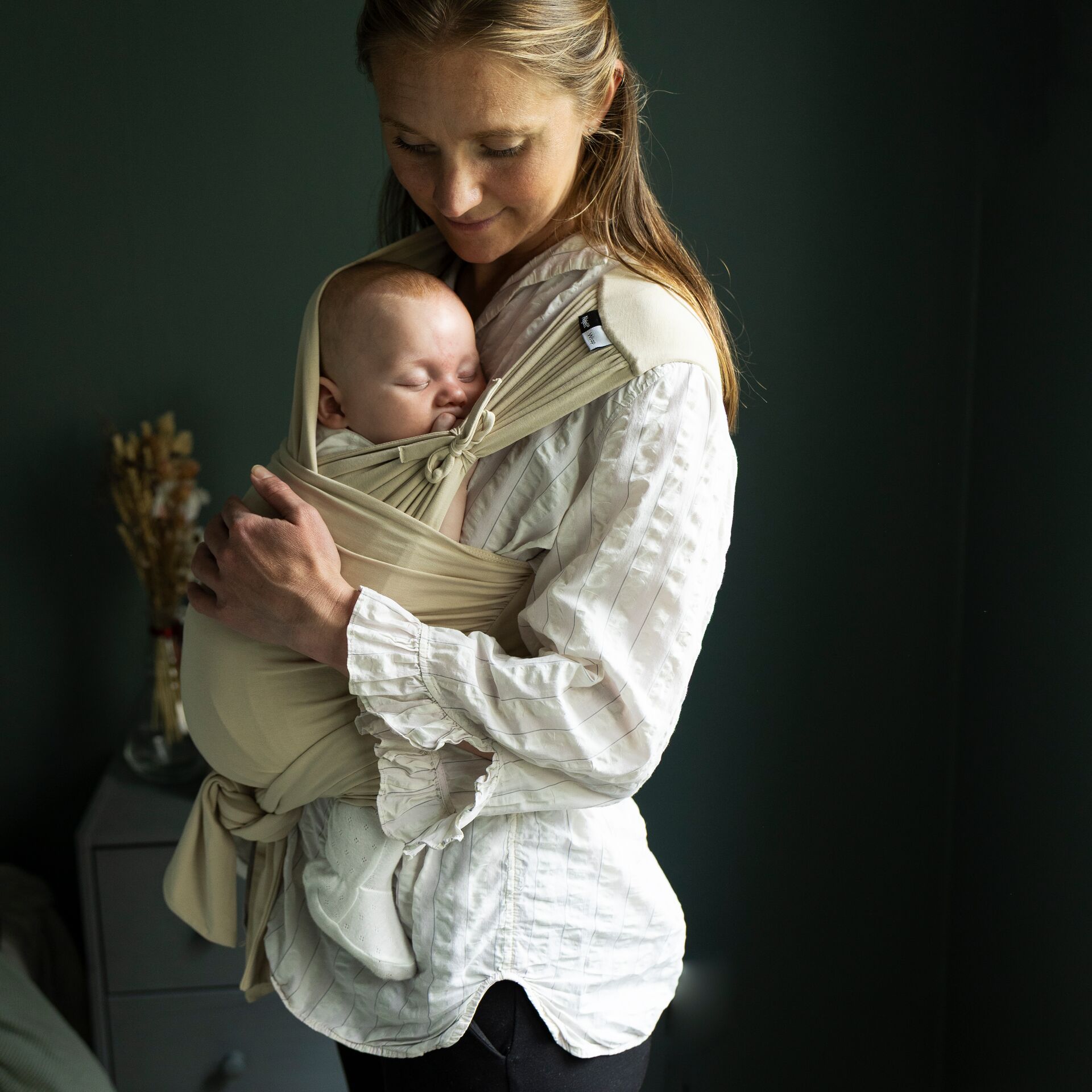
Babies who are carried in a baby carrier or wrap often settle into better sleep patterns. A 2022 research review in the Academic Journal of Pediatrics & Neonatology linked extended babywearing to better-organized infant sleep, less crying and fewer signs of anxiety.
When your baby falls asleep in the carrier, move them to a firm, flat sleep space as soon as you can, such as a babynest made for sleep.
Read more: 5 reasons to carry in a pre-tied baby wrap
4. Follow your baby's sleepy and hunger cues
Yawning, rubbing eyes, staring into space or turning away from play are all signs your baby is ready for sleep. Putting them down at that moment is much easier than waiting until they're overtired.
It can be tempting to skip daytime naps in the hope of a longer night, but it usually works the other way around. An overtired baby often finds it harder to settle in the evening. The same goes for hunger: A baby who has had a good feed tends to settle better and sleep longer.
5. Help your baby tell day from night
Babies are born without knowing the difference between day and night, and you can help them learn it. During the day, keep the curtains open, talk, play and let everyday sounds be part of naptime. At night, keep things calm, quiet and dim, especially during feeds and diaper changes. Over time, your baby will start to save their longest stretches of sleep for the night.
6. Put your baby down drowsy but awake
From around four months, try putting your baby down when they're sleepy but not yet asleep. This gives them the chance to practice falling asleep on their own, in their own sleep space. Babies who learn this are often better at settling back to sleep when they briefly wake at night.
It won't work every time, and that's okay. Cuddles and soothing still have their place – this is simply one more thing to try.
7. Give your baby a safe, familiar sleep space
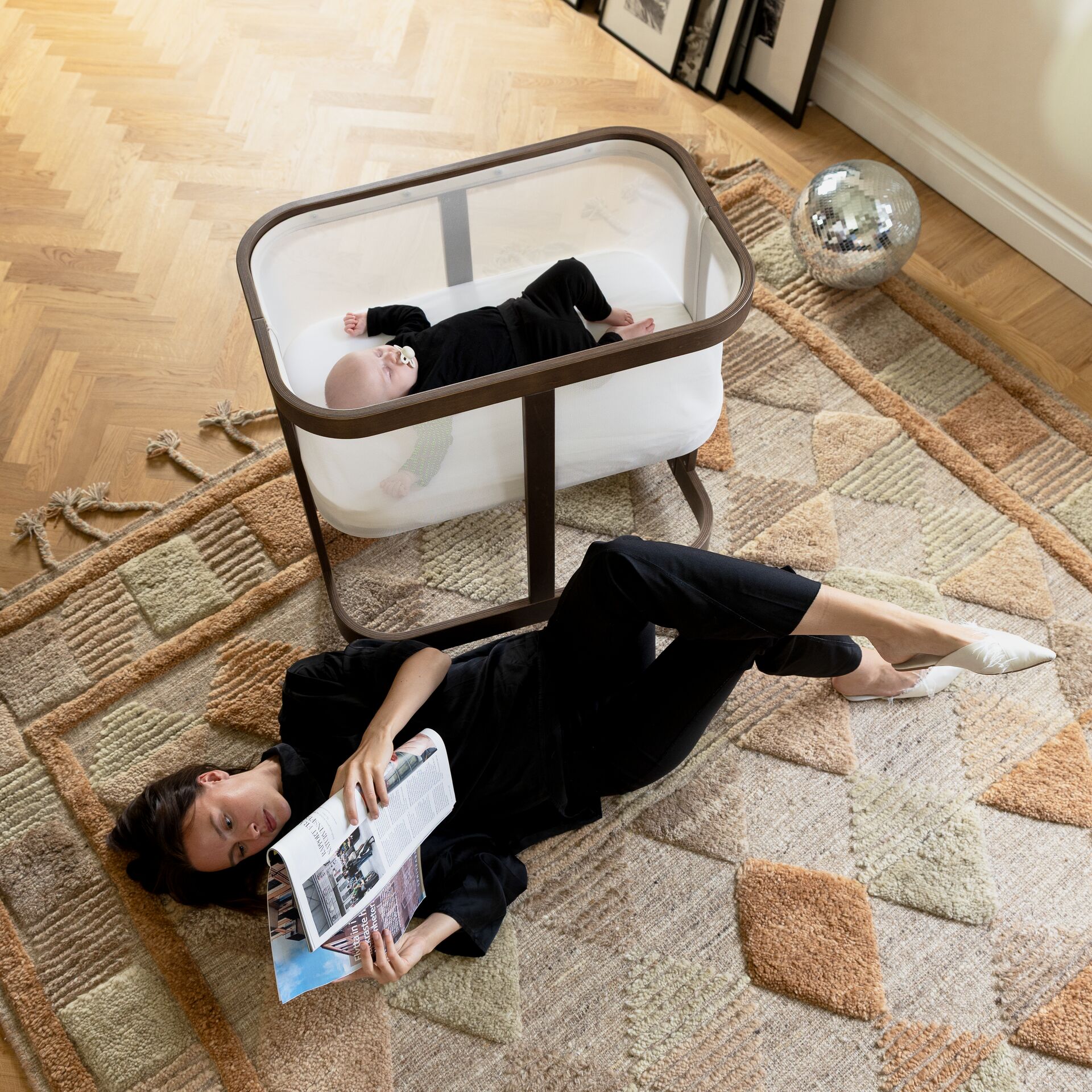
A safe sleep space is the foundation of better sleep. The American Academy of Pediatrics (AAP) recommends that babies always sleep on their back, on a firm, flat surface, with nothing else in the sleep space – no pillows, loose blankets, bumpers or toys. The AAP also recommends room-sharing without bed-sharing, ideally for at least the first six months.
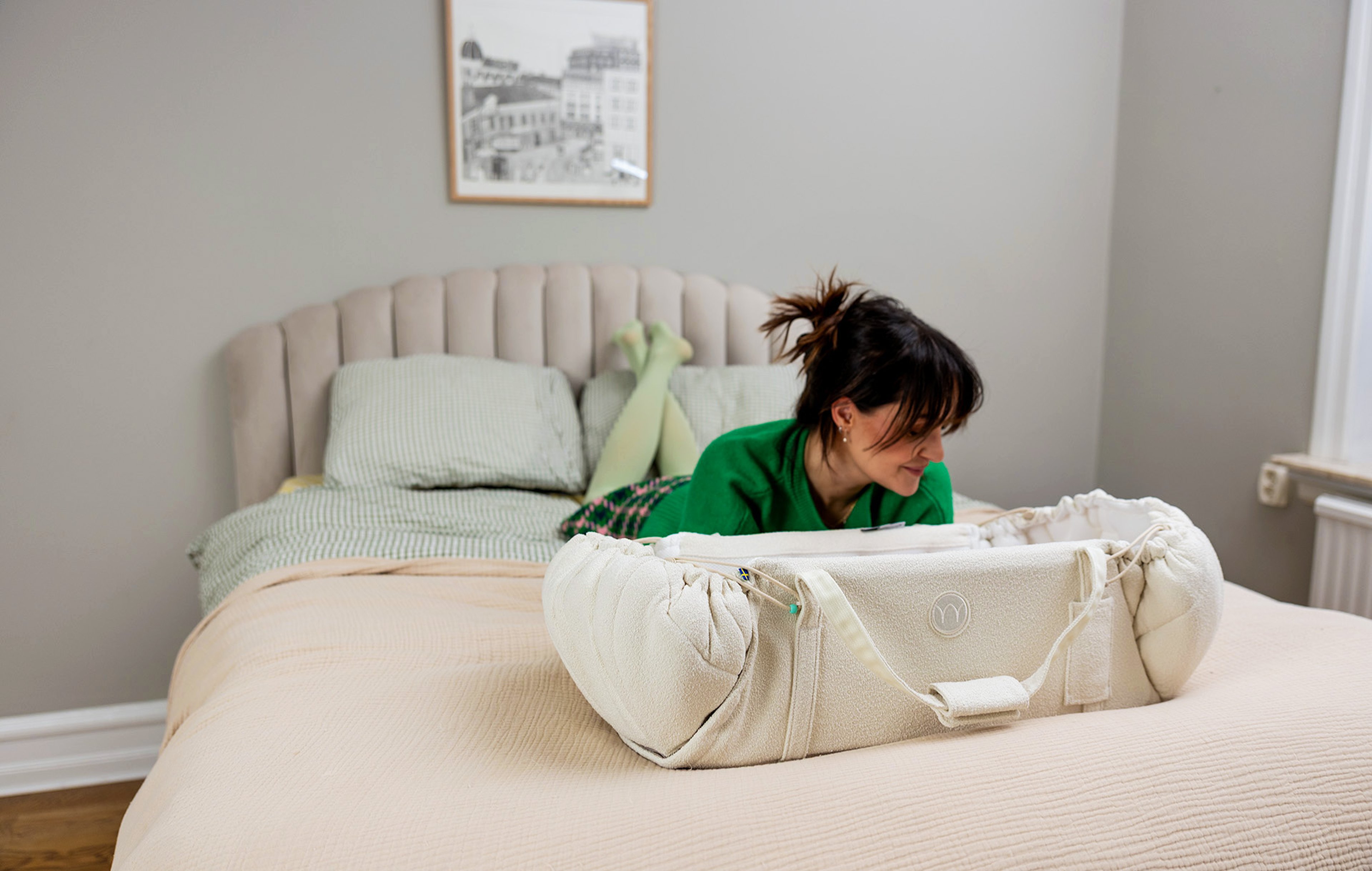
Babies also love to fall asleep somewhere familiar. Our SleepCarrier gives your baby a recognizable, safe place to sleep wherever you are, with sturdy sides, a firm mattress and breathable air mesh. It's tested to the US safety standard ASTM F2050-19, and it can be used from newborn until your baby weighs 9 kg (about 20 lbs) or can roll over or sit up.
8. Try white noise
The steady whoosh of white noise is similar to what your baby heard in the womb, and many babies find it soothing. It can also help drown out household sounds like doors, voices and traffic. If you'd like to try it, keep the volume low and place the speaker a little away from your baby's sleep space. You'll find plenty of white noise playlists on Spotify and other streaming services.
9. Keep night feeds and diaper changes calm
Keep diapers, wipes and a dim night light close to where your baby sleeps. When everything is at hand, night feeds and changes can happen quickly and quietly, without bright lights or extra trips around the house. That makes it easier for everyone to drift back to sleep.
10. Be patient with your baby – and with yourself
Baby sleep changes a lot in the first year. Growth spurts, new skills and teething can all bring a few restless nights, even after a good stretch. Stick with the habits that work for your family and give new ones a week or two before deciding.
And remember: Every baby is different. If your baby's sleep worries you, or you're running on empty, your pediatrician is always a good person to talk to.
Frequently asked questions about baby sleep
How many hours a day should a newborn sleep? Newborns sleep about 16 to 17 hours a day, spread across the day and night, often in stretches of only an hour or two. Sleep needs slowly decrease as your baby grows, and every baby is a little different.
When do babies start sleeping through the night? Some babies start sleeping for longer stretches of five to six hours by around two to three months, while others take longer. Both are completely normal. Waking briefly and settling back to sleep is also normal, even at six months.
Why won't my baby sleep at night but sleeps all day? Newborns don't yet know the difference between day and night. Bright, lively days and calm, dim nights help them learn it, usually over the first few weeks to months.
Is it okay to let my baby nap in a carrier or stroller? Naps on the go are part of everyday life. Just move your baby to a firm, flat sleep surface, on their back, when you can. A babynest made for sleep, like our SleepCarrier, fits in all strollers and can be lifted out with your baby still asleep.
What is the safest way for my baby to sleep? On their back, alone, on a firm and flat surface, with no pillows, blankets or toys. The AAP recommends this for every sleep, day and night, until your baby turns one.
Products for peaceful, safe sleep
Looking for a cozy, familiar place for your baby to sleep? Our SleepCarrier is a babynest made for every nap and every night, at home and on the go. It fits all strollers, and thanks to its handles you can lift it out and carry it inside without waking your baby. At home, it fits perfectly inside our Crib, which rolls smoothly from room to room on lockable wheels.
During the day, our baby carriers and wraps keep your baby close while leaving your hands free for everything else. And our baby sleeping bags make the bedtime routine simple, cozy and safe, without loose blankets.
Better sleep rarely comes from one big change. It comes from small, simple habits, repeated night after night. Start with one or two tips from this list, see what works for your baby, and build from there. Sweet dreams!