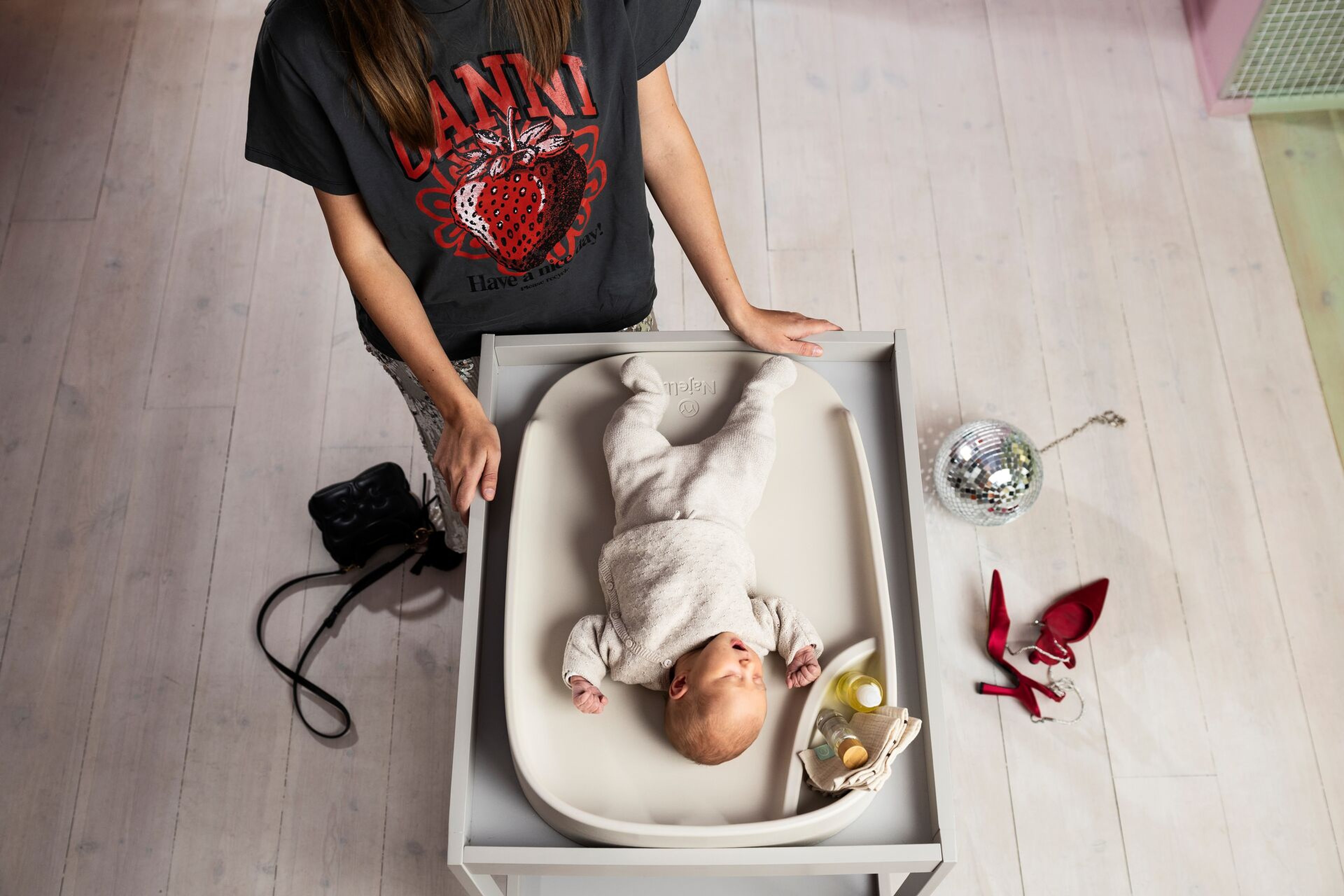
How to make diaper changes easier for your newborn
Somewhere around the eighth or tenth diaper change of the day, most new parents start wondering if there's a better way to do this. Newborns go through 8-12 changes a day, and in those early weeks, each one can feel like a small production: the squirming, the sudden chill making them cry, the diaper that somehow needs redoing five minutes later. It gets easier. Here's what helps it get easier faster.
Set up a station before you need it
The biggest time-waster in a diaper change is usually the search: for the wipes, for a clean onesie, for the one hand you don't have free because it's holding a squirming baby. Before a change ever starts, having everything within one arm's reach changes the whole experience.
A dedicated changing spot works well for most families, but it doesn't need to be elaborate. What matters more than location is that diapers, wipes, cream, and a spare outfit all live in the same place, restocked in small batches rather than in a single big supply run. Many parents also keep a second, smaller kit somewhere else in the home (or in the changing bag) so a change never means walking to the other end of the house with a fussy newborn in arms.
Time it so you're not fighting the clock
Newborns tend to need changing around feeds, either just before or just after, so building the change into that rhythm rather than treating it as an interruption can save a surprising amount of stress. Changing before a feed often works well since a hungry baby is usually more willing to lie still for a minute if a feed is coming right after.
It's also worth accepting early on that some changes just won't be neat. A diaper that leaked through an outfit at 2am doesn't need a full, careful change: it needs a quick, calm one. Lowering your own standards for what counts as "done" in the middle of the night is one of the most underrated newborn skills.
Keep it calm, not rushed
Newborns pick up on tension, and a change done quickly but tensely often takes longer than one done slowly but calmly, simply because a startled baby cries, arches, and squirms more. Talking softly, making eye contact, or narrating what you're doing ("okay, off comes this one, there we go") gives a newborn something to focus on other than the strange sensation of cool air.
A safety note that's worth repeating, not because it's alarming but because it's easy to forget in a tired moment: never leave a baby unattended on a changing surface, even for a few seconds, even once they seem too small to move. Newborns can surprise you with a well-timed wriggle.
Dress for easy access
Outfits with envelope necklines, snap closures down the legs, and front openings make a real difference in the first months, since they avoid pulling anything over a newborn's head or fully undressing them for every change. Footed sleepers with a full-length zip or snaps are a popular choice for exactly this reason. It's a small thing, but multiplied by ten changes a day, it adds up to a lot less fuss.
A few notes on skin care
A newborn's skin is still adjusting to the world, so a gentle approach usually works best: wipe front to back (especially important for baby girls, to avoid spreading bacteria), pat rather than rub dry, and let the skin air out for a moment before putting on a fresh diaper if time allows. If redness or a rash does appear, a barrier cream at each change and a little extra air time between changes usually helps. A rash that doesn't improve within a few days, or comes with blistering or fever, is worth a quick check with your pediatrician.
Handling the wiggles
As babies grow more aware, a change can turn into a wrestling match faster than expected. A soft toy held just above their head, a song sung at the same point in every change, or simply talking through each step can hold their attention long enough to get through it. Some parents find that giving a baby something to hold, even just a clean cloth, gives busy hands something to do besides reaching for the diaper.
Making the space itself work with you, not against you
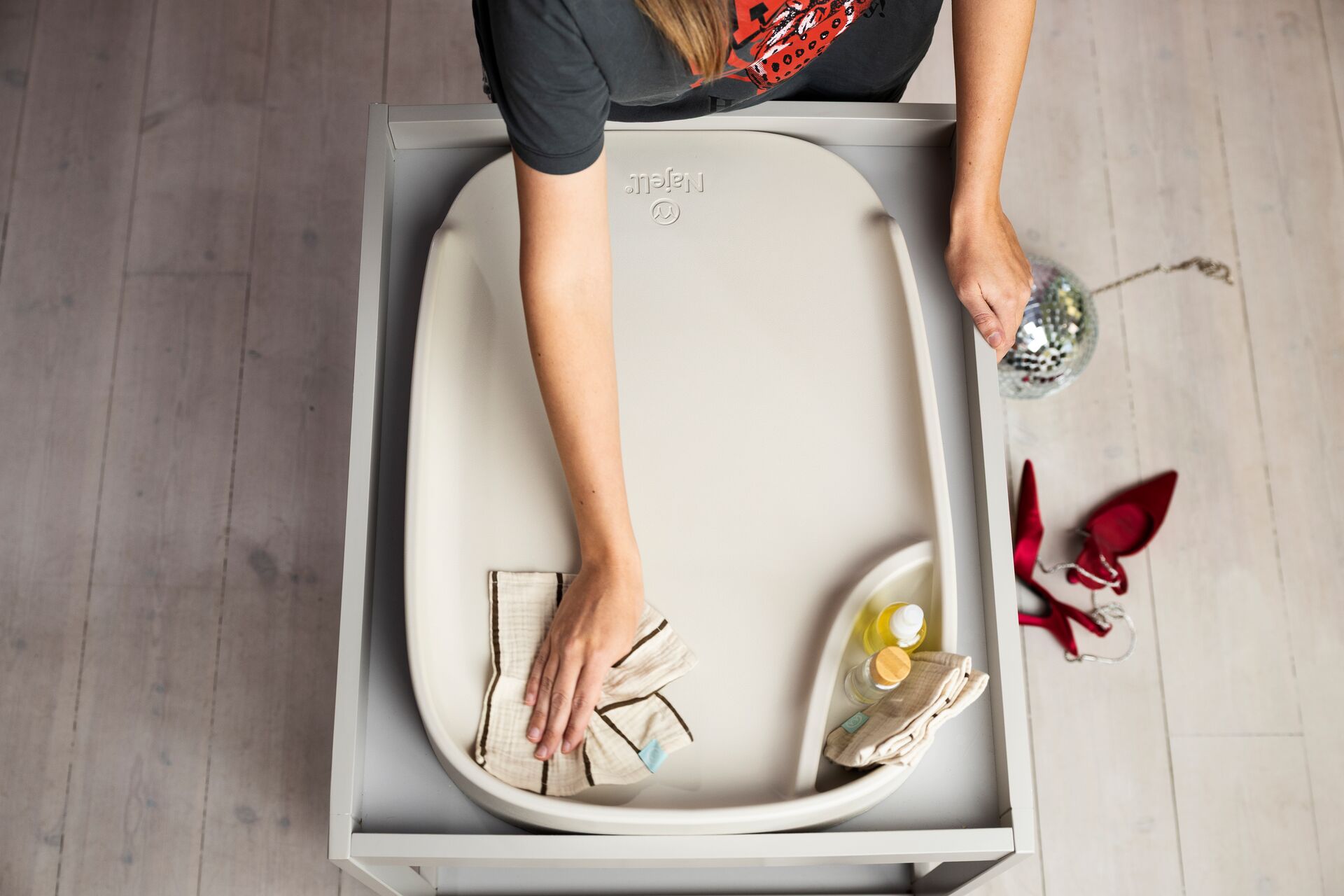
However you approach the routine, the surface you're changing on plays a bigger role than it might seem. A pad that's simple to wipe clean between changes, sits steady rather than sliding on whatever surface it's placed on, and has soft raised edges for a newborn who's starting to shift and stretch can take a lot of the low-level stress out of each change. Built-in storage for wipes or a spare diaper also means fewer of those one-handed reaches away from the baby. Our Changing Pad was designed with exactly these small frictions in mind, so the routine can stay focused on your baby rather than the logistics around them.