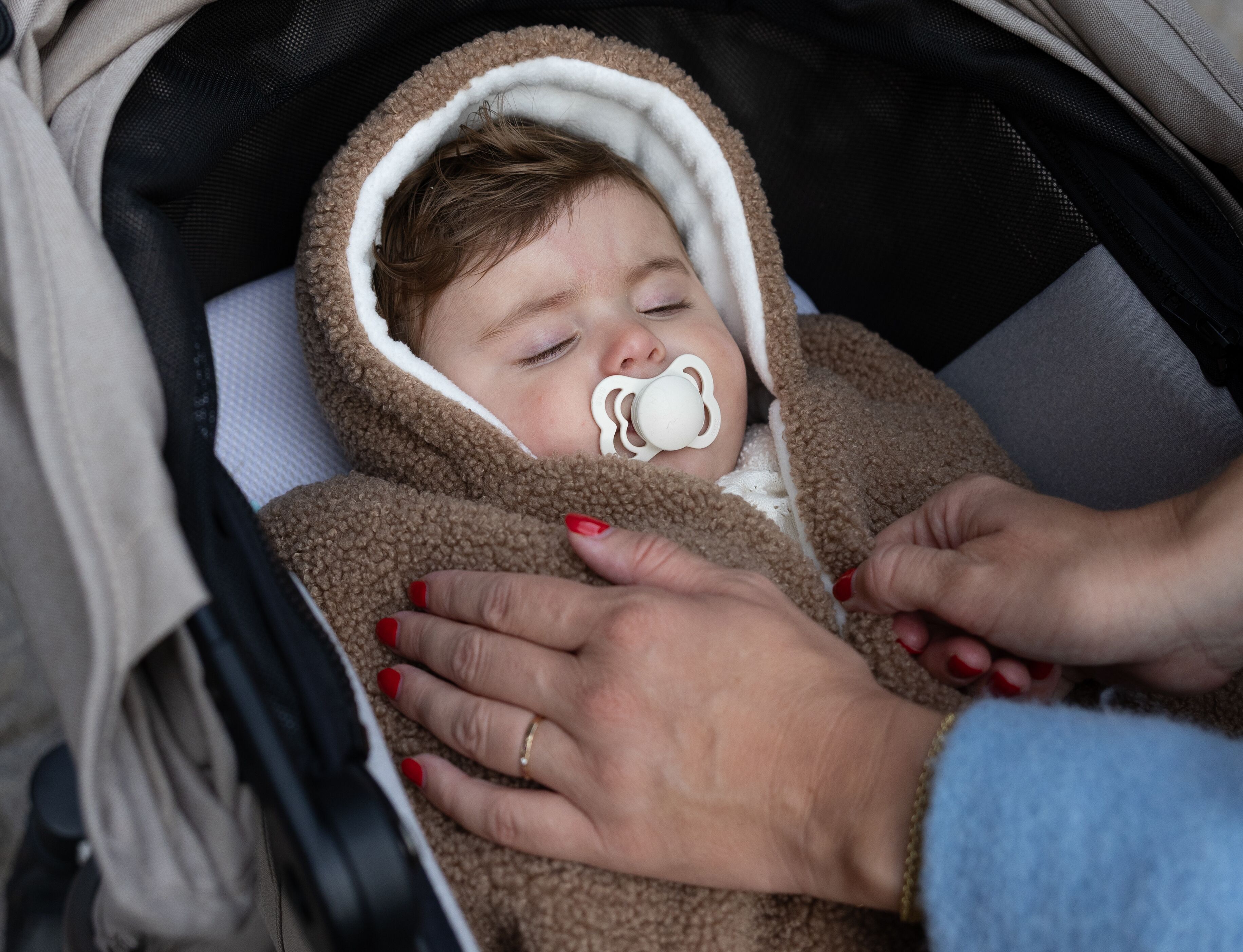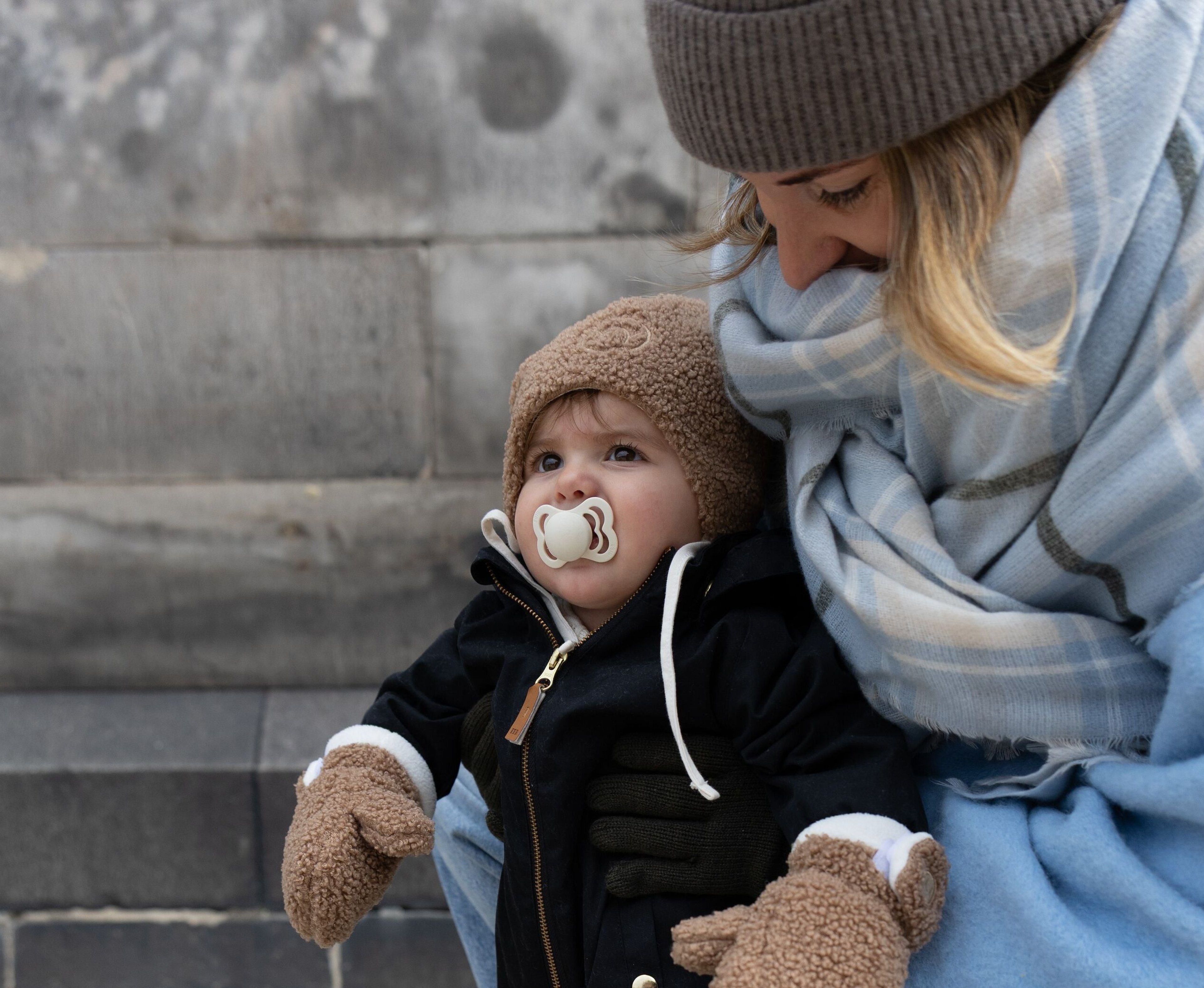
Dressing your baby for outdoor walks, season by season
You have your shoes on, your baby is ready in your arms, and one question lingers by the door: is this the right amount of clothing? The weather shifts, your baby grows, and what felt perfect last week can feel different today. The good news is that a handful of simple ideas carry you through every season, and you will find your own rhythm faster than you might expect.
Here are the starting points we come back to all year round, followed by a season-by-season look at what tends to work.
Starting points for every season
Think in thin layers. Several thin layers are easier to adjust than one thick one. A soft base layer against the skin, a middle layer, and an outer layer for wind or rain give you options. When the sun comes out or you step into a warm café, taking off a single layer takes seconds.
Natural fibres breathe. Wool and cotton let heat and moisture move through the fabric, which helps your baby stay comfortable as the temperature changes. Wool also keeps its warmth when it gets a little damp, which makes it a reliable friend on changeable days.
Feel the neck or tummy, not the hands. Babies' hands and feet are often cooler than the rest of them, and that is completely normal. Slide a finger to the back of the neck or onto the tummy instead. Warm and dry means just right. Sweaty or flushed suggests one layer can come off. Cool suggests it is time to add a layer or head somewhere cozy. Very small babies are still learning to regulate their temperature, so a quick check now and then, especially when moving between indoors and outdoors, takes the guesswork out.
Let your baby guide you. A content baby with relaxed shoulders and calm eyes is telling you that things feel good. Fussing can mean too warm or too cool, and with a few walks behind you, you will start to recognise your baby's own signals.
Stroller or carrier? In a stroller, your baby is resting while you move, so they often like a little more warmth than you need. In a baby carrier, your baby shares your body heat, so slightly lighter layers usually do the job, and a jacket or cover over the two of you adds protection from wind and rain.
One safety essential: in a baby carrier, in a stroller, and under any cover, keep your baby's face visible and the airways free. No fabric should rest over the nose or mouth, and there should always be room for fresh air to circulate.
Spring: dressing for changeable days
Spring mornings can start crisp, turn warm by lunchtime, and bring a shower in the afternoon. This is the season where layers really shine.
Base layer: a thin cotton or wool bodysuit.
Middle or outer layer: a light cardigan or jacket that is easy to take off and tuck into the bag.
Head and feet: a thin beanie for cool mornings and soft footies or socks, since spring breezes can feel cooler than the temperature suggests.
Good to have along: a spare layer and a light muslin, plus a rain cover for passing showers.
If you are unsure, start with one layer more than you think you need. It is easy to remove, and you will have your answer within a few minutes of walking.
Summer: light, breathable and shaded
In summer, the focus shifts from keeping warm to staying cool and shaded. A little planning goes a long way, and it can be as simple as choosing the right time of day.
Clothing: light, loose, breathable fabrics such as cotton, linen or bamboo. Long, airy sleeves and legs can be more comfortable than bare skin in strong sun.
Sun hat: a wide-brimmed hat that shades the face, ears and neck.
Shade: walks in the morning or late afternoon are often the most comfortable. A stroller canopy or parasol that lets air circulate keeps the sun off your baby without trapping heat.
Sun protection: babies' skin is delicate, and keeping young babies out of direct sun is the general guidance. Your midwife, child health nurse or doctor can advise on sunscreen for your baby's age.
Hydration: warm days can mean more frequent milk feeds, so plan a shady spot for a break.
In a carrier: you are warm against each other, so lightweight, breathable fabrics for both of you make the biggest difference. Pausing in the shade now and then gives you both a moment to cool down.
Evenings can cool down quickly, so a thin layer in the bag is a handy companion for the walk home.
Autumn: damp, breezy and everything in between
As the cooler months approach, mornings turn fresh and the air often carries a little moisture. Autumn rewards a layered approach, and many parents find this is the season for building up a small collection of favourites.
Base layer: wool is a lovely choice, since it stays warm even in damp air.
Middle layer: a soft sweater or a warm set of trousers.
Outer layer: something that keeps the wind and light rain away.
Head, hands and feet: the beanie is back in daily use, along with thin mittens for chilly mornings and cozy footies or wool socks.
Rain and wind: a rain cover for the stroller, or an all weather cover for the carrier, keeps your baby dry and shielded from gusts while you enjoy the golden light.
Shorter days: something reflective on your stroller or carrier makes you easy to spot on darker afternoons.
If you are getting your stroller ready for the new season, our guide to how to prepare your stroller for fall walks you through it.
Winter: cozy, with a little planning
Fresh air is just as wonderful in winter, and many families across Scandinavia head out in every kind of weather. With the right layers, your baby can enjoy it too.
Base layer: a thin layer of wool next to the skin.
Middle layer: a warm sweater and thicker trousers or a fleece.
Outer layer: an overall or a footmuff in the stroller. A footmuff makes it easy to adjust warmth without changing several layers. Our guide to what to wear in a footmuff has more ideas.
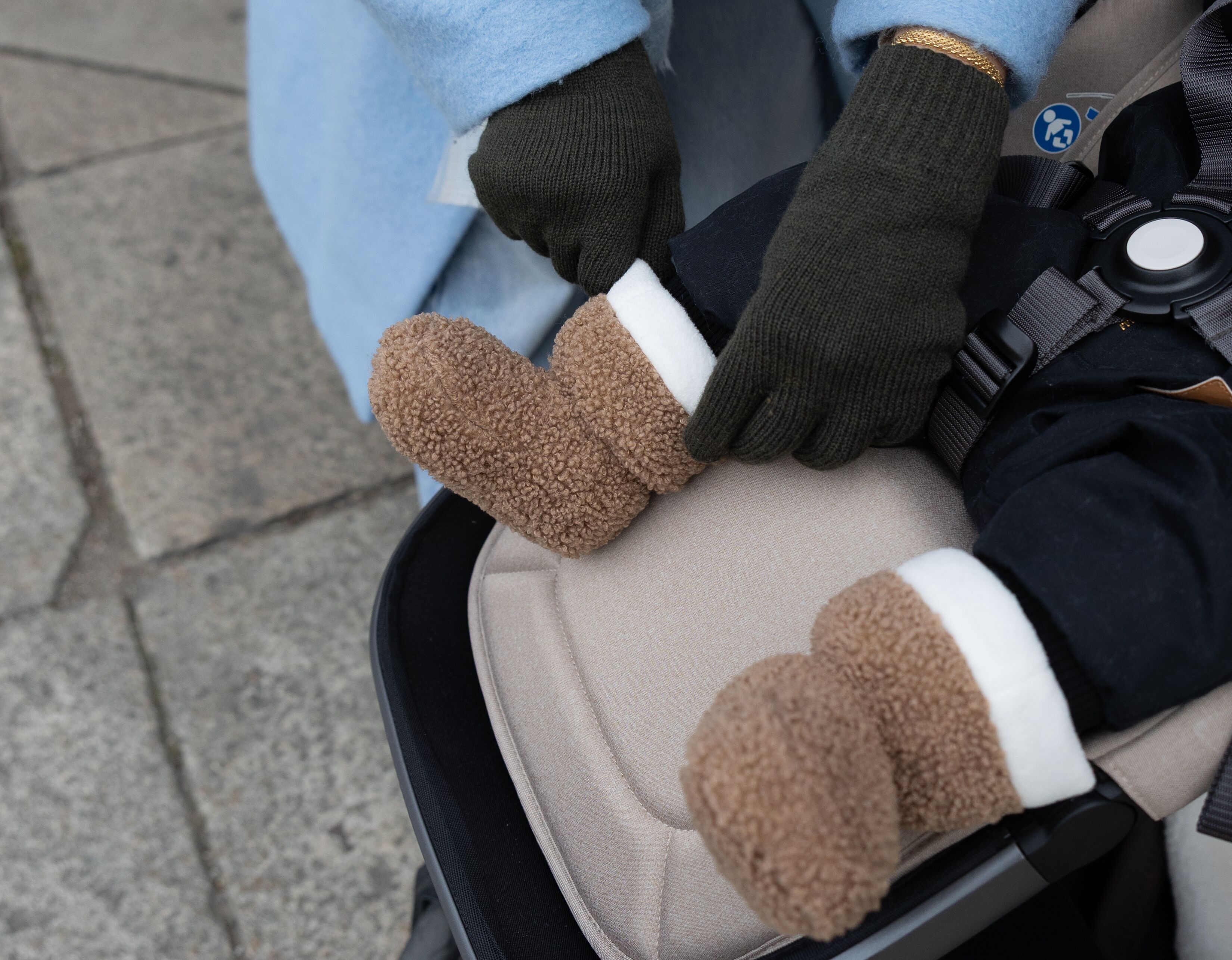
Head, hands and feet: a warm beanie that covers the ears, mittens, and wool footies or socks.
In a carrier: keep the layers thin, since your body heat does a lot of the work. A winter jacket that zips around you both, or an all weather cover, adds protection from wind, rain and snow. Our post on tips for babywearing during wintertime covers this in more detail.
Indoors again: hats and outer layers can come off as soon as you step inside. Babies warm up quickly, and a cozy baby in a café or shop is happiest with one or two layers less.
Icy paths: ice grips under your shoes make walking with your baby in a carrier feel steadier.
On very cold or windy days, a shorter walk is perfectly fine. Twenty minutes of fresh air still counts.
A car seat note: thick snowsuits and bulky coats can compress in a collision and leave the harness too loose. Take the bulky outer layer off before buckling your baby in, and place a blanket over the harness instead.
Common questions about dressing your baby for outdoor walks
How many layers should my baby wear outside? There is no single number, and that is part of the fun of finding what suits you both. A helpful starting point in a stroller is the layers you are wearing plus one, and in a carrier, slightly fewer since you share body heat. Then let the neck-and-tummy check guide you.
How do I know if my baby is too warm or too cold? Feel the back of the neck or the tummy. Warm and dry is just right, sweaty or flushed means a layer can come off, and cool means adding one. Cool hands and feet are normal and are not a reliable guide.
Can I take my newborn out in cold weather? Many families do, dressed in cozy layers and with a shorter walk to begin with. If you are unsure about your own baby, your midwife or child health nurse can help you find what feels right.
Do I dress my baby differently in a baby carrier? Usually a little lighter, since your baby is warmed by your body. Thin layers underneath and a jacket or cover on top give you plenty of flexibility. Our guide to how to keep your baby warm outside in winter has more on this.
Finding your own rhythm
Every baby, every family and every neighbourhood is a little different, so treat everything above as a starting point. After a few weeks of walks, you will know exactly which layers you reach for on a crisp October morning and which ones stay at home in June.
On days when the forecast keeps you guessing, small pieces tend to make the biggest difference: a beanie and mittens for cool mornings, soft footies to keep little toes cozy, and an all weather cover that goes over the baby carrier when rain or wind arrives. Najell's beanies, mittens, footies and All Weather Cover are made for those everyday outdoor moments, so your walks can carry on whatever the season has planned.