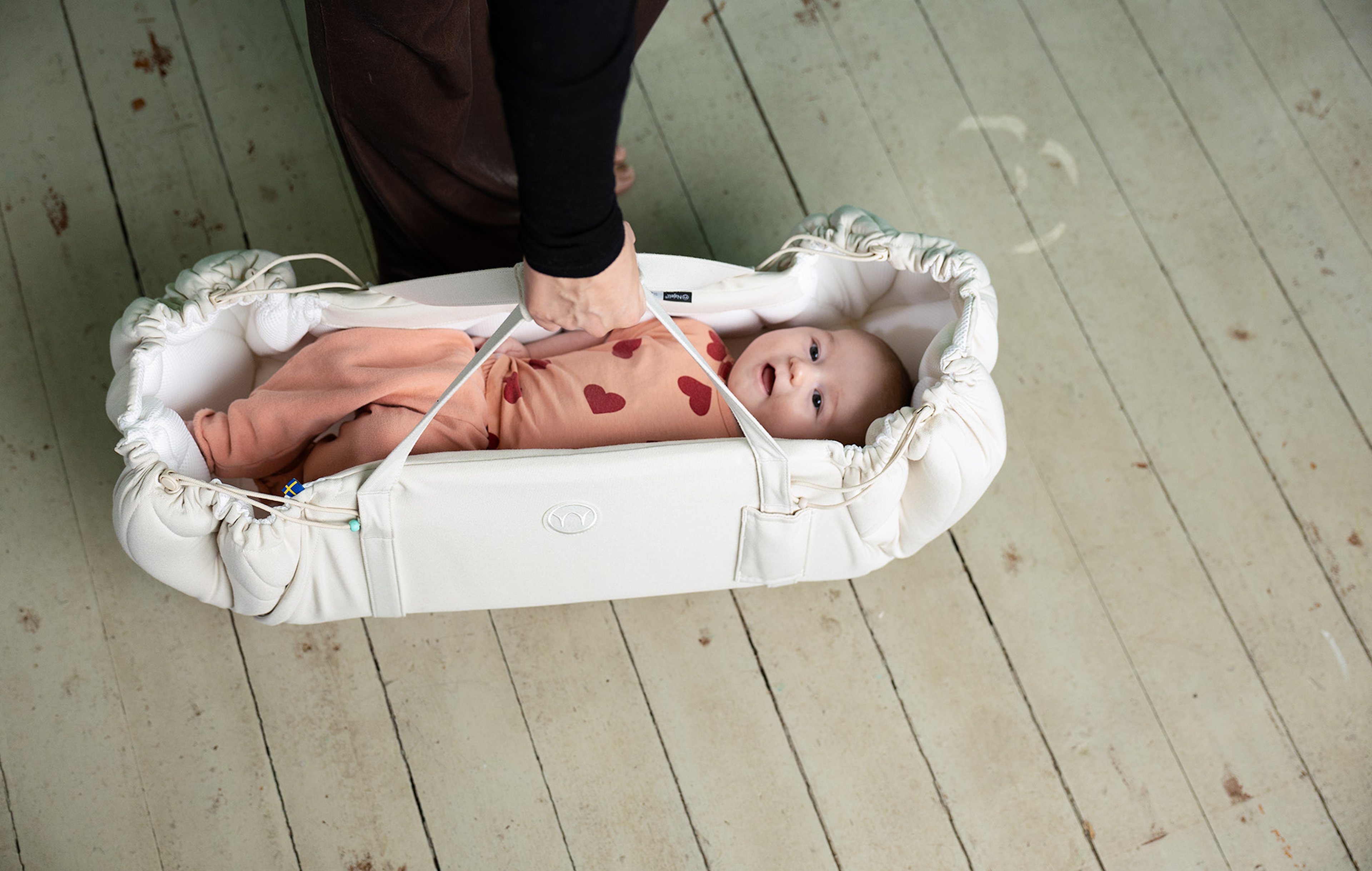
Your complete sleep guide for the first months
Your baby falls asleep on your chest, in the car or in the pram, and wakes the moment you try to put them down. If that sounds familiar, you're in good company. Sleep in the first months is less about a perfect setup and more about rhythm, flexibility and a safe place to land. This guide walks you through what newborn sleep looks like, how to make every sleep a safe one, and small habits that make evenings easier for the whole family.
Understand your baby's sleep needs
Newborns sleep a lot, often 14 to 17 hours a day, but in short stretches of one to three hours. Their tummies are small, so they wake to feed day and night. This is how babies are built, and it's a sign of healthy development rather than a problem to fix.
Because sleep comes in short bursts, it happens everywhere: in your arms, in the pram, on a walk. That's completely normal. Over the first months, night sleep gradually gets longer and a more recognisable pattern starts to appear. Until then, follow your baby's cues rather than the clock.
Make every sleep a safe sleep
Wherever your baby falls asleep, where they stay asleep matters. A few clear guidelines lower the risk of sudden infant death syndrome (SIDS) and help you rest easier:
On the back: Place your baby on their back for every sleep, naps included.
Flat and firm: Use a firm, flat mattress that fits the sleep space snugly, with no gaps at the edges.
Keep it clear: Leave out pillows, duvets, bumpers and soft toys. A fitted sheet and a baby sleeping bag are all your baby needs.
Close by: Health authorities recommend that your baby sleeps in their own sleep space in your room for at least the first six months.
Not too warm: Keep the room comfortably cool and dress your baby in light layers.
Falling asleep in a car seat, a sling or on a sofa happens to every family. When it does, move your baby to a flat, safe sleep space as soon as you can.
Why gentle movement helps
For nine months, your baby was carried, swayed and rocked with every step you took. That's why gentle, rhythmic movement feels so familiar. It can help calm a fussy baby, slow their breathing and make the drift into sleep easier.
A slow sway in your arms, a walk with the pram or soft rocking can all work. Once your baby is calm and drowsy, lay them down on their back in their own sleep space.
Build a simple bedtime rhythm
Babies love predictability. A short, repeated routine signals that night is coming, even before your baby understands what "bedtime" means. Keep it simple so it works on busy days too:
A calm walk or wind-down: A short pram walk or quiet cuddle before the evening sleep.
Dim the lights and lower the noise: Soft light and quiet voices help the body shift into night mode.
Same sleeping bag, same place: A familiar sleeping bag and a familiar sleep space become cues your baby recognises.
A lullaby or gentle rocking: The same song or sound each night ties the routine together.
The order matters less than repeating it. After a week or two, many parents notice their baby settling a little faster.
Work with naps, not against them
It can be tempting to keep a tired baby awake during the day in the hope of a longer night. In practice, an overtired baby often finds it harder to settle and wakes more at night. Well-rested babies tend to sleep better, not worse.
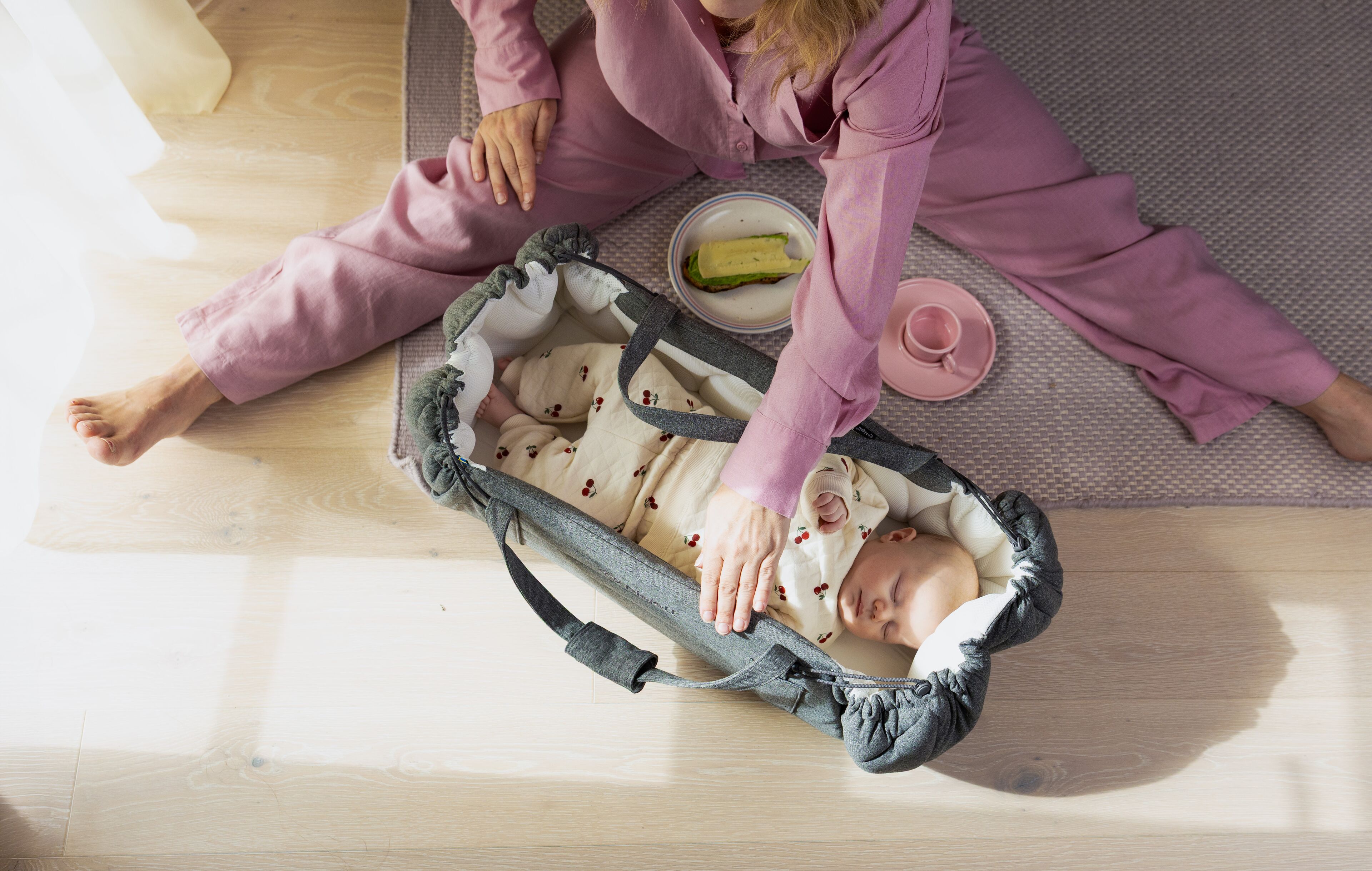
Watch for early tired signs, like staring into space, rubbing eyes or turning away from play. Offering a nap at that point usually works better than waiting for crying. In the first months, naps happen wherever life takes you, and that's okay. Bring sleep along with you and let your baby rest when they need to.
Your home base for sleep
Even when naps happen on the go, it helps to have one safe, familiar place at home where your baby sleeps every night. A dedicated sleep space close to your bed makes night feeds easier and helps your baby learn where sleep happens.
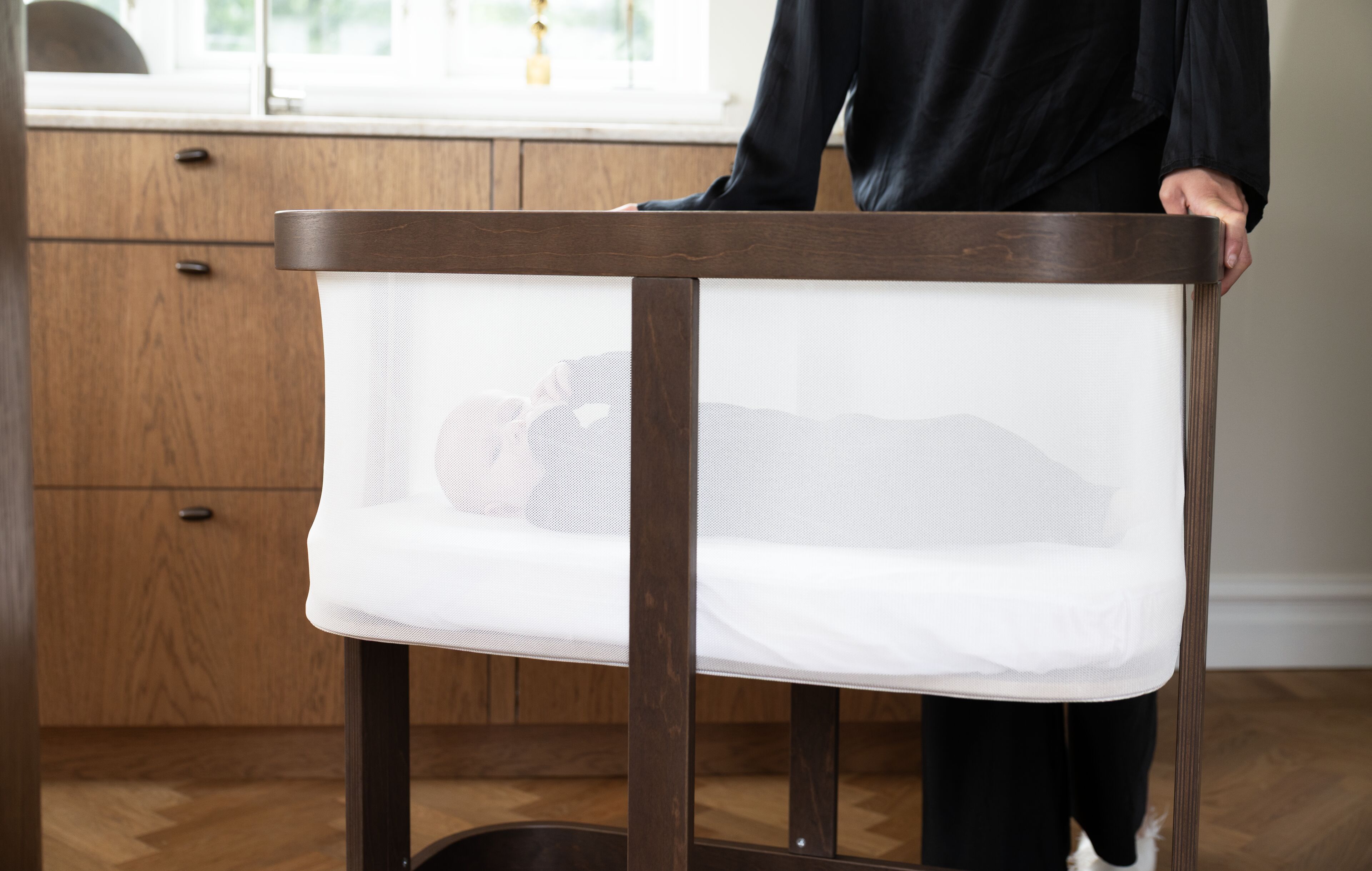
The Najell Crib is designed to be that place. It has no bars. Instead, soft sides in breathable mesh give you a clear view of your baby and a gentle barrier around them. Lockable wheels let you roll it next to your bed at night and into the living room by day, so your baby can stay close wherever you are. For the newborn time, the SleepCarrier fits perfectly inside the Crib, giving your baby a cosy space within the larger one. As your baby grows, the Crib can be extended with separate extension parts to carry on into the toddler years.
A note for tired parents
No routine or product makes every night smooth, and that's not the goal. Some nights will be harder than others, and you're doing a great job anyway. Focus on keeping sleep safe, follow your baby's cues and give yourself the same patience you give them. Rest when you can, and lean on the people around you.
FAQ
How much should a newborn sleep? Most newborns sleep around 14 to 17 hours a day, spread over short stretches of one to three hours. Every baby is different, so follow your baby's cues and talk to your child health nurse if you're unsure.
Where should my baby sleep in the first months? On their back, in their own sleep space with a firm, flat mattress, in the same room as you. Health authorities recommend room-sharing for at least the first six months.
Is it okay if my baby naps in the pram or in my arms? Yes, naps on the go are normal in the first months. If your baby falls asleep in a car seat, sling or on a sofa, move them to a flat, safe sleep space as soon as you can.
When do babies start sleeping longer at night? Night sleep usually starts to lengthen gradually during the first months, as your baby's tummy grows and their body clock develops. The timing varies a lot between babies.
Should I keep my baby awake during the day so they sleep better at night? It usually works the other way around. Overtired babies often find it harder to settle, so offering naps when your baby shows tired signs tends to support better night sleep.
Does my baby need a pillow or duvet? No, a fitted sheet on a firm mattress and a baby sleeping bag are all your baby needs. A sleeping bag keeps your baby warm without loose bedding that could cover their face.