
A sleep routine that actually works in real life
Every baby sleeps a little differently, and every family's day looks a little different too. The good news is that you don't need a perfect plan to help your baby sleep well. A few simple habits, repeated most days, go a long way.
Here's a sleep routine made for real life: easy to start, easy to keep up, and flexible enough to move with you.
Why do sleep routines help – and how do you make one stick?
Babies love predictability. When you do roughly the same things in roughly the same order, your baby starts to recognize the signal: now it's time to wind down. It can be as simple as dimming the lights, changing a diaper and spending a few quiet minutes close to you.
The secret to a routine that sticks is keeping it simple. Short, familiar steps are easy to repeat on busy days, on tired days, and on days when a sibling needs you too.
And if a day doesn't go to plan, that's completely okay. A routine works because you keep coming back to it, not because you get it perfect every time.
What does a simple sleep routine actually look like?
Here's what you can do, for naps and bedtime alike, from the newborn weeks up to around six months:
Start with the cues. Pick one or two things you do every time sleep is coming: dim the lights, lower your voice, put on a fresh diaper, or share a few minutes of skin-to-skin contact.
Add a short wind-down. A feed, a cuddle or a song – whatever calms your baby. A couple of minutes is plenty for naps, and at bedtime you can take a little longer.
Choose a familiar sleep space. Pick one spot your baby recognizes and links with sleep. The more familiar it feels, the easier it is for your baby to settle.
Make the transfer gentle. When your baby has fallen asleep, keep as much as possible the same as you put them down – the same surface, the same scent, the same position. That helps them stay asleep.
Give yourself a moment. Once your baby is sleeping safely, step away and take a breath. A good routine is there to support you too.
As your baby grows, the same steps keep working. You'll just adjust the timing along the way.
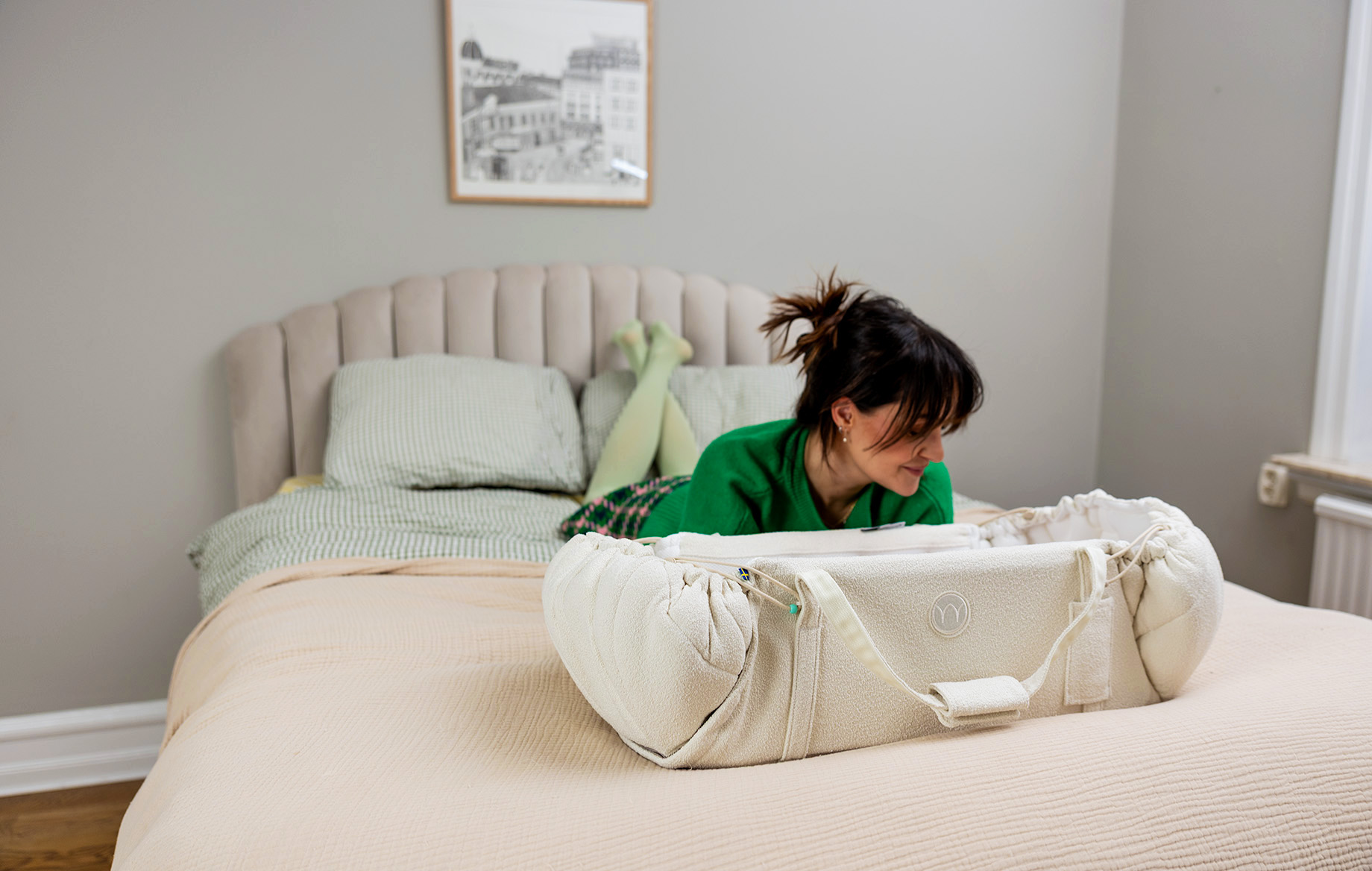
Where should your baby sleep during the routine?
The sleep space and the transfer are where the right products can really help. Two that work beautifully together are the Najell SleepCarrier and the Najell Crib.
The SleepCarrier: The same familiar spot, wherever you are. The SleepCarrier is a babynest with stable, sturdy sides, a firm mattress and breathable air mesh. Because it has handles and fits in all prams, your baby's sleep spot can come with you – from the bedroom to the living room, out on a walk, or to a family visit. That way, your routine can stay the same even on the busiest days.
A tip many parents swear by: keep the SleepCarrier in your bed for a week before your baby arrives. It picks up your scent, so it feels familiar from the very first nap.
The Crib: A calm base for naps and nights. The Crib has soft sides and breathable mesh instead of bars, so air flows freely and you can see your baby from across the room. Smooth-rolling, lockable wheels make it easy to keep your baby close – in the living room during the day, next to your bed at night.
Using them together. The SleepCarrier fits perfectly inside the Crib. That makes the transfer – often the trickiest step – so much easier. Your baby can fall asleep in the SleepCarrier, and you can place them in the Crib without disturbing their rest.
Both the SleepCarrier and the Crib are designed for your baby's first months, up to 9 kg (about 20 lbs) or until they can roll over or sit up on their own. Wherever your baby sleeps, a few simple habits keep it safe: always place them on their back, with no pillows, loose blankets or toys in the sleep space.
What can you do when the day doesn't go to plan?
Growth spurts, colds, visitors and naps on the go are all part of life with a baby. Your routine can bend with them. Here's how:
Keep the cues, wherever you are. Dim lights and a quiet voice work just as well in a hotel room or at grandma's.
Bring the sleep space with you. A familiar spot helps a new place feel like home.
Aim for roughly, not exactly. Roughly the same steps, in roughly the same order, at roughly the same time is more than enough.
Pick it up again tomorrow. Your baby still knows the routine, and so do you.
The best sleep routine is the one that works for your family. It helps your baby rest, and it gives you a little space to rest too – so you can be fully present when your baby needs you.