
Bedside crib or free-standing crib: Which suits you?
The first months are full of small, wonderful moments, and many of them happen at night, just an arm's length away. Health organisations recommend that your baby sleeps in the same room as you, in their own sleep space, for at least the first six months. So where that sleep space stands, and how it fits into your nights, really matters.
A bedside crib and a free-standing crib are both great ways to keep your baby close and safe. Each one brings something different to your nights, your bedroom and your days. Here's what to know about each, so you can choose with confidence and create a sleep space that fits your life as well as your floor plan.
What is a free-standing crib?
A free-standing crib stands on its own legs or wheels, with all four sides in place. That gives you freedom: right beside your bed, at the foot of it, or wherever your room works best. Smaller free-standing cribs are made especially for the first months, while others are full-size cots or can be extended as your child grows.
What is a bedside crib?
A bedside crib (also called a next-to-me crib or side-sleeper) attaches to the side of your bed. One side folds down or opens, so your baby's mattress lines up with yours. Your baby sleeps on their own surface, and you can reach them without getting up, which many parents love during night feeds.
Most bedside cribs can also stand on their own with the side raised, and many are height-adjustable to suit different beds.
Safe sleep, made simple
Whichever crib you choose, a few simple habits create a calm and safe place to sleep. They work the same way for both:
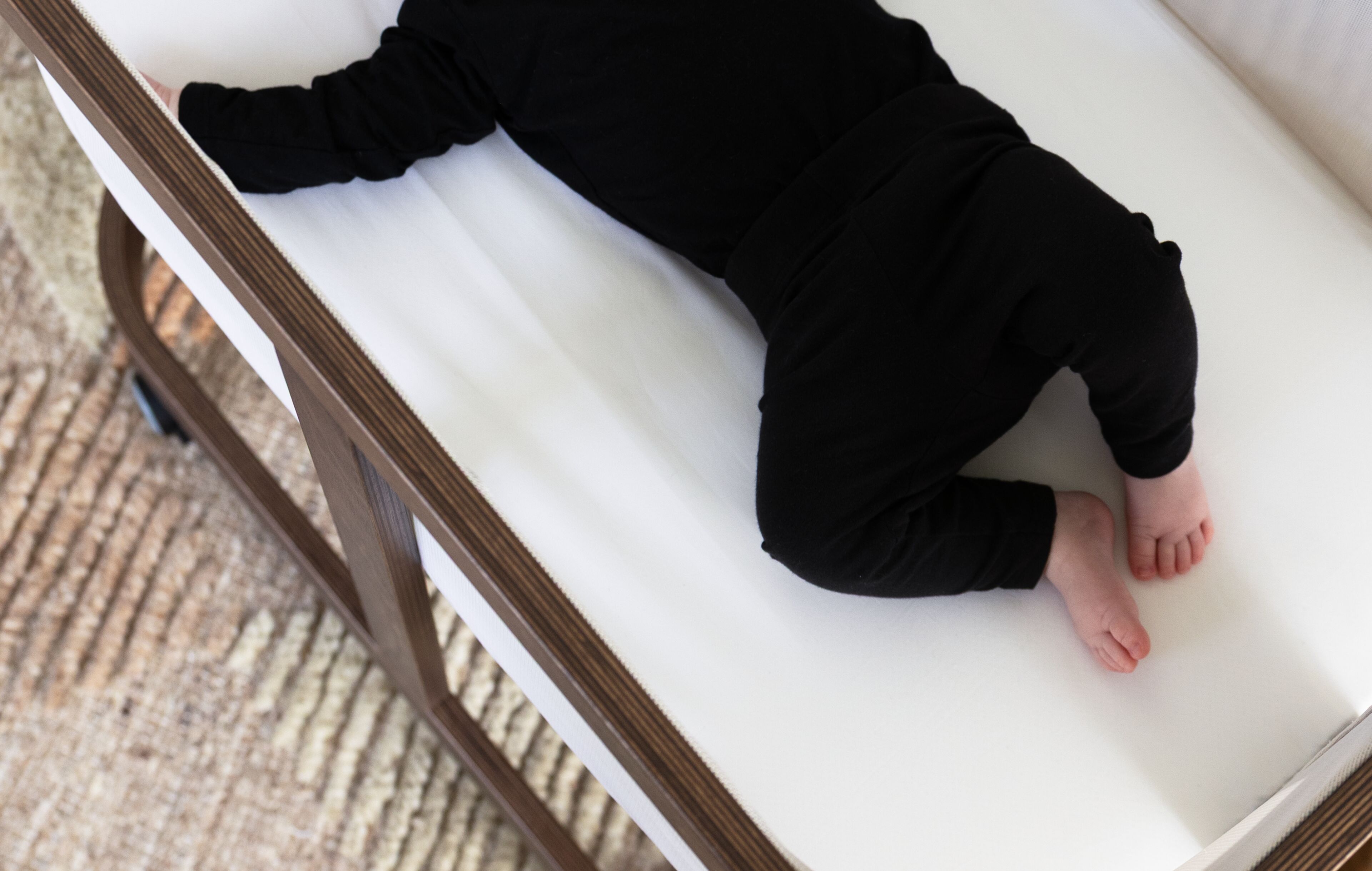
On their back. Lay your baby on their back for every sleep, naps and nights alike. It's the position experts recommend because it helps keep your baby's airway clear.
A firm, flat, waterproof mattress that fits. Your baby's head should rest on top of the mattress, sinking in just a few millimetres, so their nose and mouth stay free. A mattress that fits snugly along every edge keeps little arms and legs safely on the sleep surface.
A clear crib. A fitted sheet is all your baby needs, and a baby sleeping bag keeps them cosy through the night. A clear sleep space keeps their face uncovered and lets fresh air flow around them, which is why pillows, duvets, bumpers and soft toys are best kept outside the crib.
The right safety standard. In Europe, look for EN 1130, the standard for cribs, cradles and bedside cribs. It's an easy way to know the crib has been tested for safe sleep.
Close by, in their own space. Keeping your baby in your room for every sleep, for at least the first six months, means you're right there while they sleep in a space of their own.
A free-standing crib that moves with your day
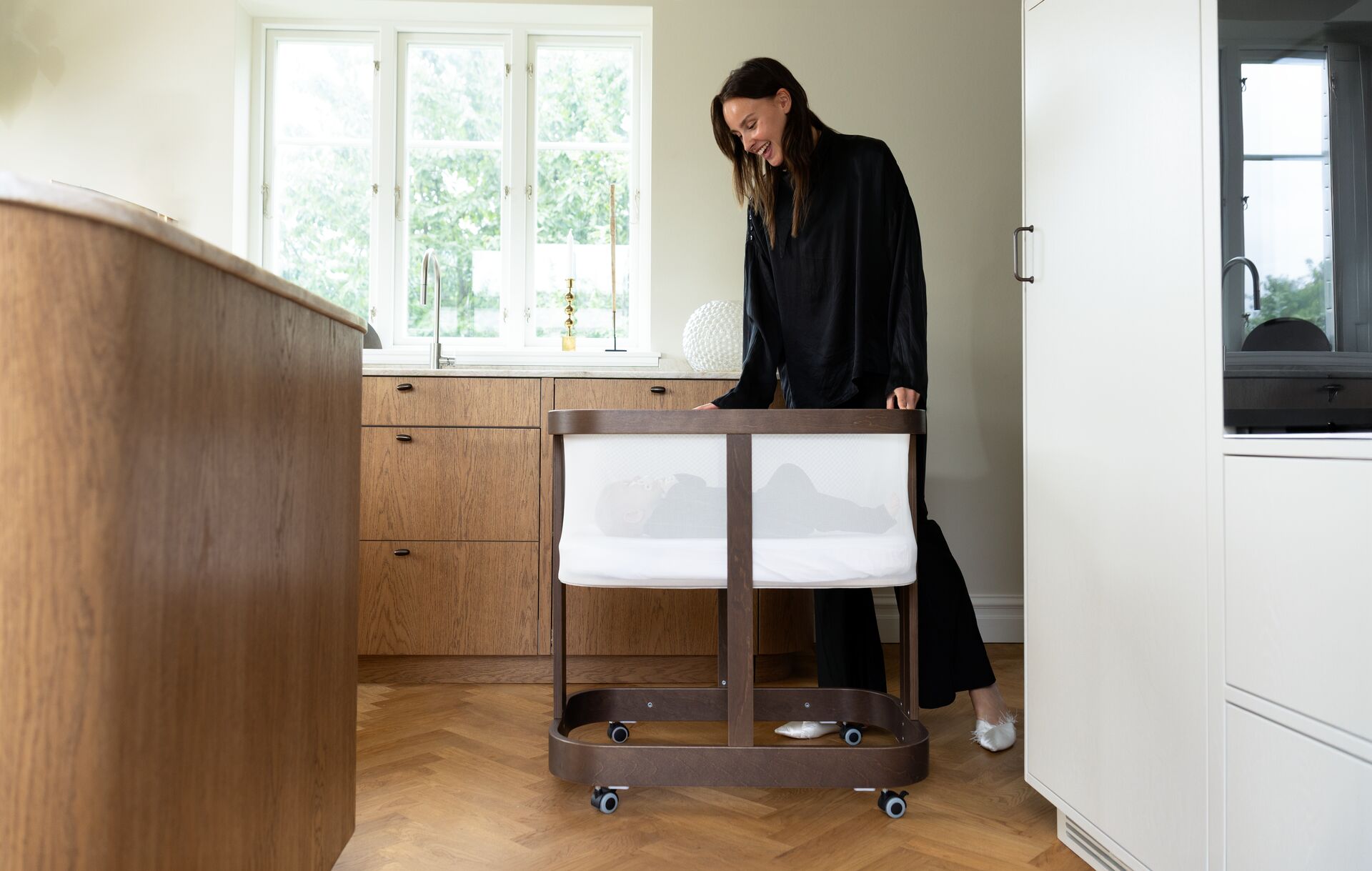
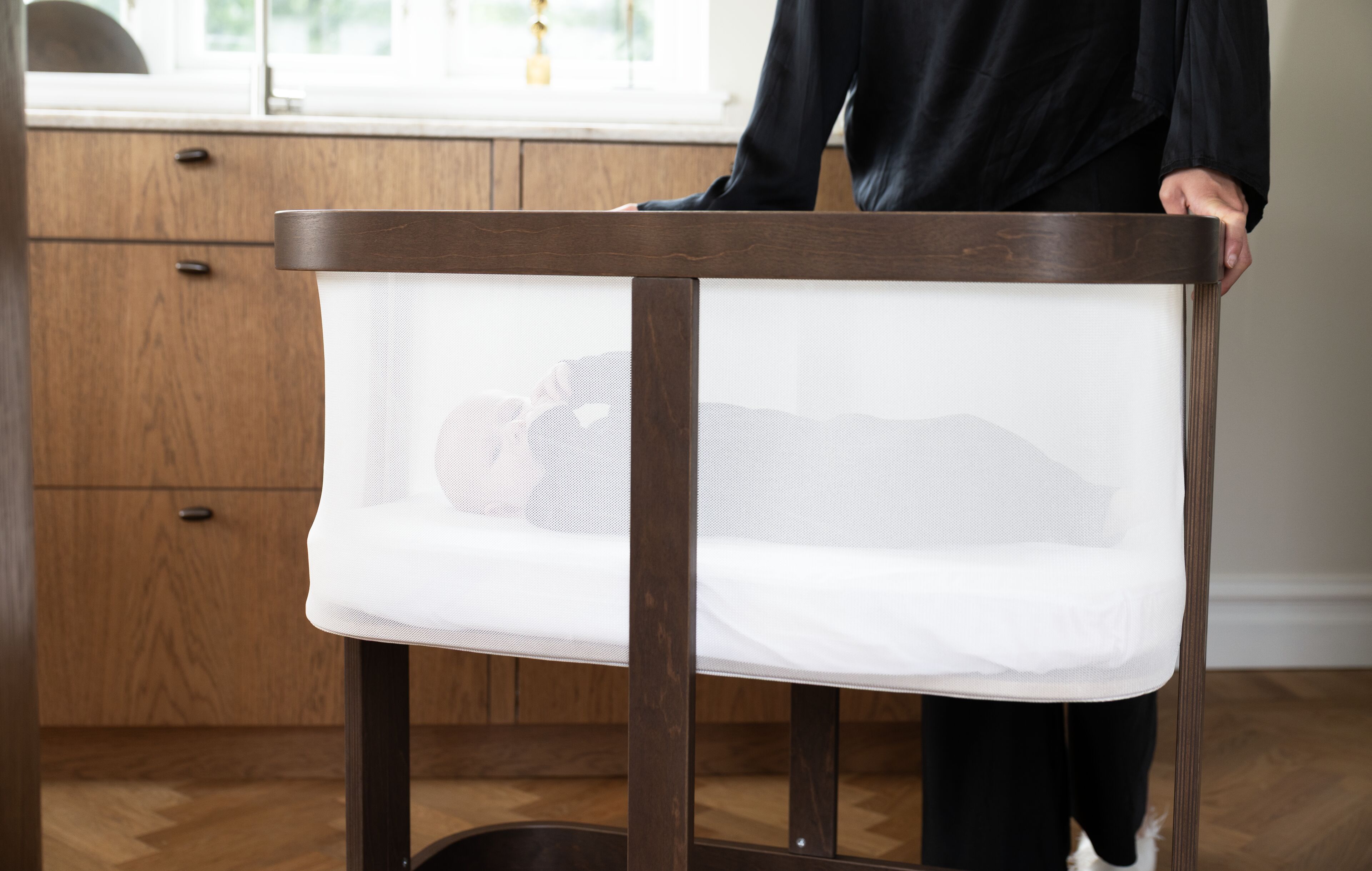
If you're drawn to free-standing, the Najell Crib is made for the first months and beyond. Soft, breathable Airmesh sides let you see your baby from every angle, and lockable wheels let it follow you from the bedroom to the living room. At 80 × 50 cm, it's also small enough to do the job of a bedside crib: roll it right up against your bed, lock the wheels, and your baby sleeps within arm's reach. With all four sides up, it stands on its own and is ready as soon as it's in place. As your child grows, you can extend it with the Crib Extension. The SleepCarrier fits inside too, so you can lift your sleeping baby in with less disturbance.
A free-standing crib that moves with your day
If you're drawn to free-standing, the Najell Crib is made for the first months and beyond. Soft, breathable Airmesh sides let you see your baby from every angle, and lockable wheels let it follow you from the bedroom to the living room. At 80 × 50 cm, it's also small enough to do the job of a bedside crib: roll it right up against your bed, lock the wheels, and your baby sleeps within arm's reach. With all four sides up, it stands on its own and is ready as soon as it's in place. As your child grows, you can extend it with the Crib Extension. The SleepCarrier fits inside too, so you can lift your sleeping baby in with less disturbance.
Frequently asked questions
Is a bedside crib safer than a free-standing crib? Both can be equally safe when they meet the safety standard and are set up correctly. With a bedside crib, attaching it securely and making sure the mattresses meet snugly matter most.
How long can my baby sleep in a bedside crib? Until they start to roll over, sit up or pull themselves up, or reach the weight limit in the manual, whichever comes first. It's a lovely sign that your little one is growing and ready for a bigger sleep space.
Can I put a free-standing crib right next to my bed? Yes, and it's a great way to keep your baby close. Lock the wheels, keep your own bedding on your side, and let your baby sleep on their own mattress.
How long should my baby sleep in my room? Health organisations recommend room sharing for every sleep, day and night, for at least the first six months. It keeps you close by while your baby's sleep finds its rhythm.
Can my baby nap in the crib during the day too? Yes! Using the same sleep space for naps and nights helps your baby learn where sleep happens, which can make settling a little easier over time.
Can the Najell Crib grow with my child?
Yes. The Najell Crib is made for the first months, until your baby weighs 9 kg or starts to roll over or sit up. Then the Crib Extension adds extra length, giving your growing child more room in the same familiar bed. Its open side lets your little one climb in and out on their own when they’re ready for more independence, so one bed can take you from the newborn days to the toddler years.